
The Journal
Off the Beaten Track Asia: Luxury Bhutan, Mongolia & Borneo
Discover the most secluded corners of the East through curated itineraries and exclusive private estates.
The contemporary traveller no longer seeks merely to see; they seek to feel. As traditional hubs like Tokyo, Bangkok, and Bali reach a saturation point, a new frontier of luxury travel has emerged in the quieter, more profound corners of the continent. Off the beaten track Asia is not about a lack of infrastructure, but rather the presence of exclusivity, space, and a deep connection to heritage that remains untainted by mass tourism.
From the carbon-negative valleys of the Himalayas to the nomadic silence of the Gobi Desert, these destinations offer a rare commodity: true seclusion. At The Travel Co., we specialise in bridging the gap between rugged, remote landscapes and the sophisticated comforts expected by the discerning British traveller. Whether it is a private helicopter transfer across the Bhutanese peaks or a colonial-style river cruiser along the Mekong, the journey is as meticulously curated as the destination.
This guide explores four cornerstone regions where the veil between the modern world and ancient tradition is at its thinnest. Here, luxury is defined by the quality of the silence, the authenticity of the encounter, and the seamless logistics that allow for total immersion in the wild.
Bhutan Luxury: The Kingdom of the Thunder Dragon
Bhutan remains one of the world’s most enigmatic destinations, largely due to its "High Value, Low Volume" tourism policy. This ensures that the kingdom never feels crowded, preserving the sanctity of its dzongs (fortresses) and the purity of its mountain air. Bhutan luxury is defined by a series of high-altitude valleys—Paro, Thimphu, Punakha, Phobjikha, and Bumthang—each offering a distinct microclimate and cultural flavour.
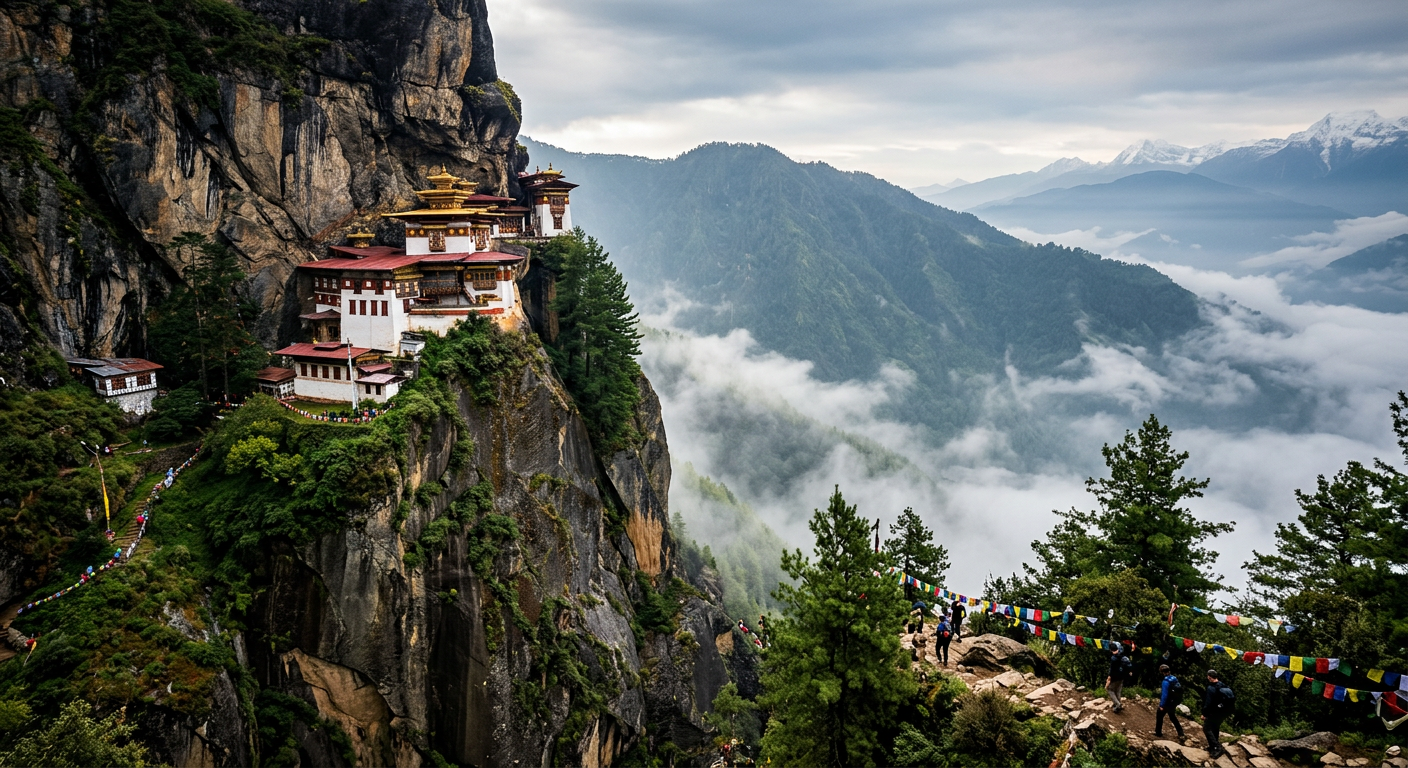
A bespoke itinerary typically begins in Paro, home to the iconic Tiger’s Nest Monastery (Paro Taktsang). While most hikers ascend the steep trails on foot, The Travel Co. can arrange private pony treks or early-access permits to ensure a more serene experience. Staying at the Amankora or COMO Uma Paro provides a sanctuary of minimalist design after a day of exploration.
As you move east into the Punakha Valley, the scenery shifts from alpine forests to subtropical terraces. The Punakha Dzong, situated at the confluence of the Pho Chhu and Mo Chhu rivers, is arguably the most beautiful structure in the country. For those seeking true isolation, the Gangtey Valley (Phobjikha) offers a chance to witness the rare black-necked cranes in winter, staying at the exquisite Gangtey Lodge, where floor-to-ceiling windows overlook the 17th-century monastery.
- Best Time to Visit: March to May (rhododendron season) or September to November (clear mountain views).
- Key Experience: A private butter lamp lighting ceremony in a 7th-century temple.
- Transfer Tip: Drukair and Bhutan Airlines operate flights from Delhi, Bangkok, and Singapore. Expect scenic, manual-landing approaches that are amongst the most exhilarating in the world.
Mongolia Tours: Sophisticated Nomadism
Mongolia is the ultimate destination for those who find beauty in the infinite. With a population density of just two people per square kilometre, it offers a sense of scale that is impossible to find elsewhere. Mongolia tours have evolved significantly, moving away from basic camping to sophisticated expedition camps that mirror the nomadic lifestyle without sacrificing comfort.
The Gobi Desert, in the south, is a land of "Flaming Cliffs" and singing sand dunes. Here, the Three Camel Lodge serves as a blueprint for sustainable luxury, constructed entirely according to traditional techniques without using a single nail. Guests can explore the Yol Valley, a deep ice-filled gorge, or track the elusive snow leopard with expert local rangers.
In the northern reaches, the landscape transforms into the lush grasslands of the Orkhon Valley and the crystalline waters of Lake Khövsgöl. Private mobile camps—often referred to as "Glamping"—allow travellers to follow the seasons just as the nomads do. These camps feature hand-painted gers (yurts) equipped with wood-burning stoves, Egyptian cotton linens, and private en-suite bathroom tents.
The Naadam Experience
For those visiting in July, the Naadam Festival is the pinnacle of the Mongolian calendar. While the central festival in Ulaanbaatar is grand, The Travel Co. recommends attending a "Rural Naadam" in a remote province. Here, you can witness the "three games of men"—wrestling, horse racing, and archery—in an intimate setting, often as the only international guests present.
Laos Travel: The Slow Pace of the Mekong
While neighbouring Thailand and Vietnam have accelerated into the future, Laos travel remains delightfully tethered to the past. The landlocked nation is a tapestry of limestone karsts, coffee plantations, and the ever-present Mekong River. The spiritual heart of the country is Luang Prabang, a UNESCO World Heritage town where saffron-robed monks collect morning alms against a backdrop of French colonial architecture.
Luxury in Laos is found in the "slow travel" movement. Instead of rushing between sites, guests are encouraged to take a private traditional longboat up the Mekong to the Pak Ou Caves or the Kuang Si Falls. The Rosewood Luang Prabang, with its luxury hilltop tents, offers a jungle retreat that feels worlds away from the town centre, despite being only ten minutes by private car.
Further south, the Bolaven Plateau offers a cooler climate and some of the world’s finest organic coffee. Exploring this region involves visiting remote ethnic minority villages and cascading waterfalls like Tad Fane. The southern "Si Phan Don" (Four Thousand Islands) region provides a final frontier for relaxation, where the Mekong widens and the pace of life slows to a near-halt.
- Essential Dish: Laap (minced meat salad with lime and herbs) served with sticky rice.
- Flight Connections: Direct flights to Luang Prabang are available from Bangkok, Hanoi, and Siem Reap.
- Currency: Lao Kip (LAK), though USD and Thai Baht are widely accepted for larger purchases.
Borneo Wildlife: Rainforests and Rare Encounters
Borneo, the world’s third-largest island, is split between Malaysia, Indonesia, and Brunei. For those seeking Borneo wildlife, the Malaysian state of Sabah offers the most refined infrastructure for eco-luxury. This is one of the few places on Earth where you can see orangutans, pygmy elephants, and proboscis monkeys in their natural habitat.
The Danum Valley Conservation Area is the crown jewel of Borneo’s rainforests. Staying at the Borneo Rainforest Lodge allows for canopy walks and night safaris led by world-class naturalists. The primary rainforest here is over 130 million years old, creating a cathedral-like atmosphere of ancient trees and vibrant biodiversity.
For a coastal contrast, the Gaya Island Resort off the coast of Kota Kinabalu provides a marine sanctuary experience. Guests can participate in coral reef restoration or kayak through mangrove forests. The transition from the dense interior jungle to the turquoise waters of the South China Sea creates a diverse 10-day itinerary that satisfies both the adventurer and the hedonist.
Comparing Remote Asia Destinations
| Feature | Bhutan | Mongolia | Laos | Borneo | | :--- | :--- | :--- | :--- | :--- | | Primary Draw | Spirituality & Peaks | Vast Landscapes | Culture & Rivers | Wildlife & Jungle | | Luxury Style | Elegant Mountain Lodges | Boutique Expedition Gers | Colonial & Riverside | Eco-Chic Retreats | | Physicality | Moderate (High Altitude) | Moderate (Driving) | Easy-Going | Variable (Humid) | | Best Window | Autumn / Spring | Summer (June - August) | Nov - February | March - October | | Average Cost | High (££££) | Mid-High (£££) | Mid (££) | Mid-High (£££) |
The Logistics of Off-Grid Luxury
Travelling to off the beaten track Asia requires a level of logistical foresight that standard online booking platforms cannot provide. In Bhutan, the government-mandated Sustainable Development Fee (currently $100 USD per person per night) must be processed through registered operators. In Mongolia, the sheer lack of paved roads in the interior means that having a private 4x4 with a professional driver and mechanical support is a necessity, not a luxury.
The Travel Co. manages these complexities by maintaining direct relationships with local fixers, bush pilots, and lodge owners. We understand that a luxury holiday is ruined by a four-hour delay at a remote border crossing or a poorly ventilated vehicle. Our itineraries include "buffer" days and VIP meet-and-greet services at regional hubs like Singapore’s Changi or Bangkok’s Suvarnabhumi to ensure the transition from the West to the Far East is seamless.
Culinary Journeys in the Wilderness
Food is a vital component of the offbeat experience. In Bhutan, you will be introduced to Ema Datshi, a spicy dish of chillies and cheese that reflects the warmth of the local people. We arrange private dinners in farmhouses where you can try your hand at making buckwheat noodles or sipping ara, a traditional fermented spirit.
In Mongolia, the cuisine is traditionally meat and dairy-centric, designed for the rigours of nomadic life. However, luxury camps now employ international chefs who fuse local ingredients—like wild herbs from the steppe and organic mutton—with contemporary techniques. Imagine a white-linen dinner served under the stars in the middle of the Gobi, featuring a rack of lamb slow-roasted in a traditional khorkhog (stone BBQ) style, paired with a fine Argentinian Malbec.
Laos offers perhaps the most delicate palate of the four. The influence of French culinary technique is evident in the boulangeries of Luang Prabang, while the local cuisine relies on fresh river fish and complex herb pastes. A private cooking class at the Bamboo Tree restaurant or a sunset dinner cruise on the Mekong provides a sensory map of the country’s history.
Sustainable Travel and Local Impact
When visiting sensitive regions like the Danum Valley or the Himalayas, the environmental footprint is a primary concern. The Travel Co. prioritises properties that demonstrate a clear commitment to conservation and community. In Borneo, this means supporting lodges that fund orangutan rehabilitation. In Bhutan, it involves staying in lodges that use geothermal heating and support local education initiatives.
The shift toward "regenerative travel" means that your presence should actively improve the destination. By choosing luxury operators that pay fair wages and invest in local infrastructure, travellers ensure that these "off the beaten track" locations remain pristine for the next generation. We provide our guests with detailed "Conscious Travel" guides for each region, advising on everything from plastic reduction to culturally sensitive photography.
Planning Your Wardrobe and Kit
Packing for remote Asia requires a "layering" philosophy. In Bhutan and Mongolia, temperatures can swing by 20 degrees Celsius between midday sun and midnight frost. High-quality merino wool base layers and a lightweight down jacket are essential, even in summer. For Laos and Borneo, the challenge is humidity; moisture-wicking fabrics and high-SPF sun protection are the priorities.
We recommend a high-quality pair of binoculars for Borneo wildlife viewing and a sturdy pair of broken-in hiking boots for the Bhutanese trails. While most luxury lodges provide high-end toiletries and amenities, we suggest bringing a personalised medical kit, as pharmacies in the Gobi or the deep rainforest are non-existent.
Member Hotels: A Curated Collection
For those looking to book their next adventure, these properties represent the pinnacle of luxury in their respective regions:
- Amankora, Bhutan: A series of five sophisticated lodges across the central and western valleys.
- Six Senses Bhutan: Known for its "Satellite" concept, offering stunning architecture in Thimphu and Punakha.
- Gangtey Lodge, Bhutan: A warm, farmhouse-style retreat overlooking a glacial valley.
- Three Camel Lodge, Mongolia: The premier eco-lodge in the Gobi Desert.
- HSAN Expedition Camp, Mongolia: A mobile luxury ger camp that moves with the seasons.
- Terelj Hotel, Mongolia: A palatial retreat in Gorkhi-Terelj National Park, perfect for a bookend to a desert trip.
- Amantaka, Luang Prabang, Laos: Housed in a former provincial hospital, this is the height of colonial elegance.
- Rosewood Luang Prabang, Laos: Features bespoke luxury tents and a waterfall-side spa.
- La Résidence Phou Vao, Laos: A Belmond hotel with arguably the best views in Luang Prabang.
- Muang La Lodge, Northern Laos: A remote sanctuary focused on hot springs and ethnic encounters.
- Borneo Rainforest Lodge, Malaysia: The only luxury option within the Danum Valley Conservation Area.
- Gaya Island Resort, Malaysia: A hillside retreat on a private island near Kota Kinabalu.
- Shangri-La Rasa Ria, Borneo: Offers a private nature reserve and a world-class golf course.
- The Datai Langkawi, Malaysia: While not in Borneo, it is the perfect jungle-beach extension for a South East Asia trip.
- Como Uma Paro, Bhutan: Noted for its exceptional spa and proximity to the airport for short stays.
- Zannier Hotels Phum Baitang, Cambodia: Often combined with Laos for a complete Indochina circuit.
FAQ: Off the Beaten Track Asia
Q: Is it safe to travel to these remote regions? A: Yes, these destinations are remarkably safe for international travellers. Bhutan is one of the safest countries in the world, and Mongolia’s nomadic culture is rooted in hospitality. The primary "risks" are environmental—altitude in Bhutan or heat in Borneo—which we mitigate through expert guiding and high-end logistics.
Q: Do I need a visa for Bhutan and Mongolia? A: British passport holders require a visa for both. Bhutanese visas are processed as part of your booking with The Travel Co. Mongolian visas can often be obtained as an e-visa for short stays, though we handle all documentation requirements for our clients to ensure a smooth entry.
Q: What is the internet connectivity like? A: In luxury lodges in Luang Prabang or Paro, Wi-Fi is excellent. However, in the Gobi Desert or the Danum Valley, connectivity is limited or non-existent. We encourage guests to embrace this "digital detox," though satellite phones are always available for emergencies.
Q: Can these trips be customised for families? A: Absolutely. While some treks in Bhutan are strenuous, many activities—like archery in Mongolia or river tubing in Laos—are perfect for teenagers. We tailor the pace of the itinerary to suit the youngest (or oldest) members of the group.
Plan your trip with The Travel Co.
The Travel Co. is a premier bespoke travel agency with offices in the UK and Dubai, providing ATOL and ABTA-protected peace of mind for every journey. Our specialists have personally scouted the valleys of Bhutan and the dunes of the Gobi to ensure our recommendations are based on first-hand expertise. We don't just book hotels; we craft legacies. From the moment you depart London or Dubai to your final sunset over the Mekong, every detail is managed with precision. Contact our senior editors and destination specialists today to begin designing your off the beaten track Asia escape, where true luxury meets the thrill of the unknown.
Inspired?
Plan a trip like this
Our specialists craft every itinerary from scratch — ATOL & ABTA protected, with 24/7 in-trip support.
Enquire Now