
The Journal
Kenya vs Tanzania Safari: Which is Better in 2026?
A definitive guide comparing East Africa’s premier wildlife destinations for the discerning luxury traveller.
The debate regarding the superior East African safari destination is as old as the industry itself. For the sophisticated traveller planning a luxury safari in 2026, the choice between Kenya and Tanzania is rarely about which country is 'better' in a vacuum, but rather which landscape aligns with a specific vision of the wild. Both nations serve as the stage for the Great Wildebeest Migration, house the continent’s most iconic predators, and offer world-class hospitality that seamlessly blends rugged adventure with refined elegance.
As 2026 approaches, new conservation initiatives and the opening of ultra-exclusive lodges are shifting the landscape of high-end travel. Kenya continues to lead in terms of accessibility and private conservancy models, while Tanzania offers a sense of scale and raw wilderness that is increasingly rare in the modern world. Understanding the nuances of these two giants—from the logistics of Wilson Airport in Nairobi to the volcanic floor of the Ngorongoro Crater—is essential for crafting a bespoke itinerary that exceeds expectations.
The Travel Co. specialises in navigating these complexities, ensuring that whether one chooses the rolling hills of the Maasai Mara or the endless horizons of the Serengeti, the experience is underpinned by seamless logistics and unparalleled access. This comparison dissects the vital components of the East African circuit, providing an authoritative roadmap for those seeking the ultimate wilderness encounter.
The Great Migration: Serengeti vs Maasai Mara
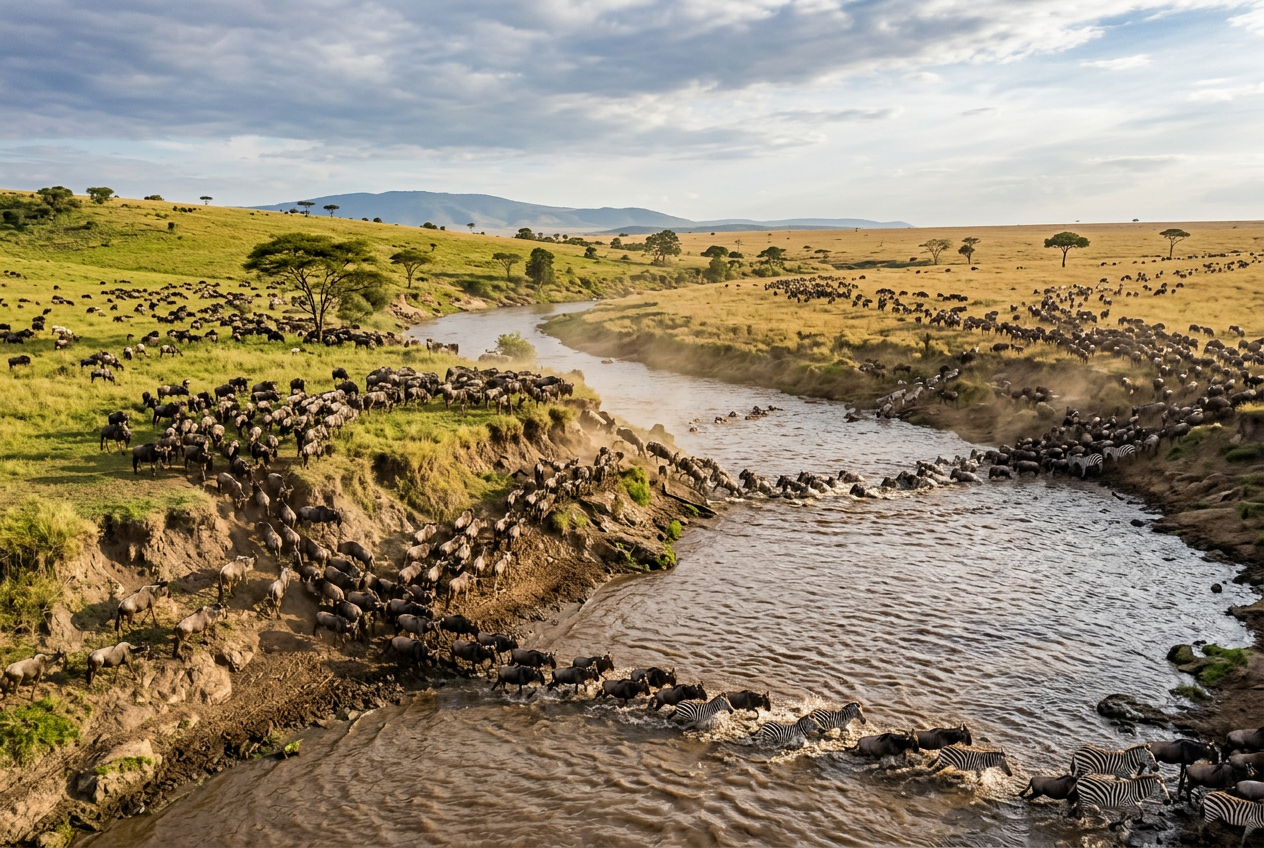
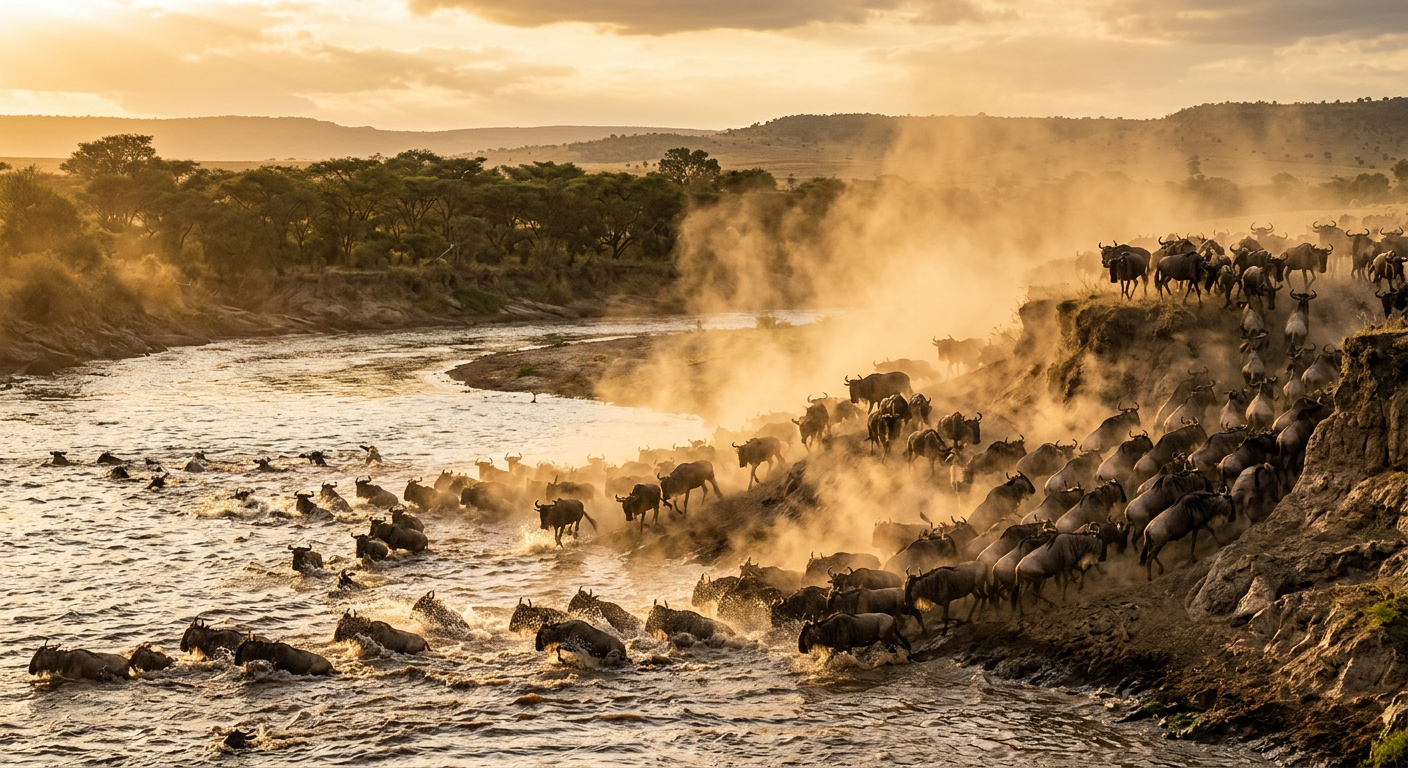
The Great Migration is the primary driver for tourism in both nations. While the herds are constantly on the move, the experience of witnessing this spectacle differs significantly between the two countries. In 2026, the herds will follow a predictable yet weather-dependent clockwise circuit.
Tanzania hosts the migration for approximately nine months of the year. From January to March, the southern Serengeti and Ngorongoro Conservation Area are the focus, as the calving season sees hundreds of thousands of wildebeest calves born within a three-week window. By June and July, the herds move northwards through the Western Corridor.
Kenya’s Maasai Mara typically receives the migration from August to October. While the Mara represents a smaller portion of the overall ecosystem, the concentration of wildlife during these months is staggering. The dramatic Mara River crossings, where herds must brave crocodile-infested waters, are most frequently witnessed here. However, because the Mara is smaller, it can feel more crowded than the vast expanses of the Serengeti. For those seeking exclusivity during the 2026 peak season, The Travel Co. recommends staying within private conservancies such as Mara North or Olare Motorogi, which limit vehicle numbers and allow for off-road driving.
Landscape and Topography: Vastness vs Variety
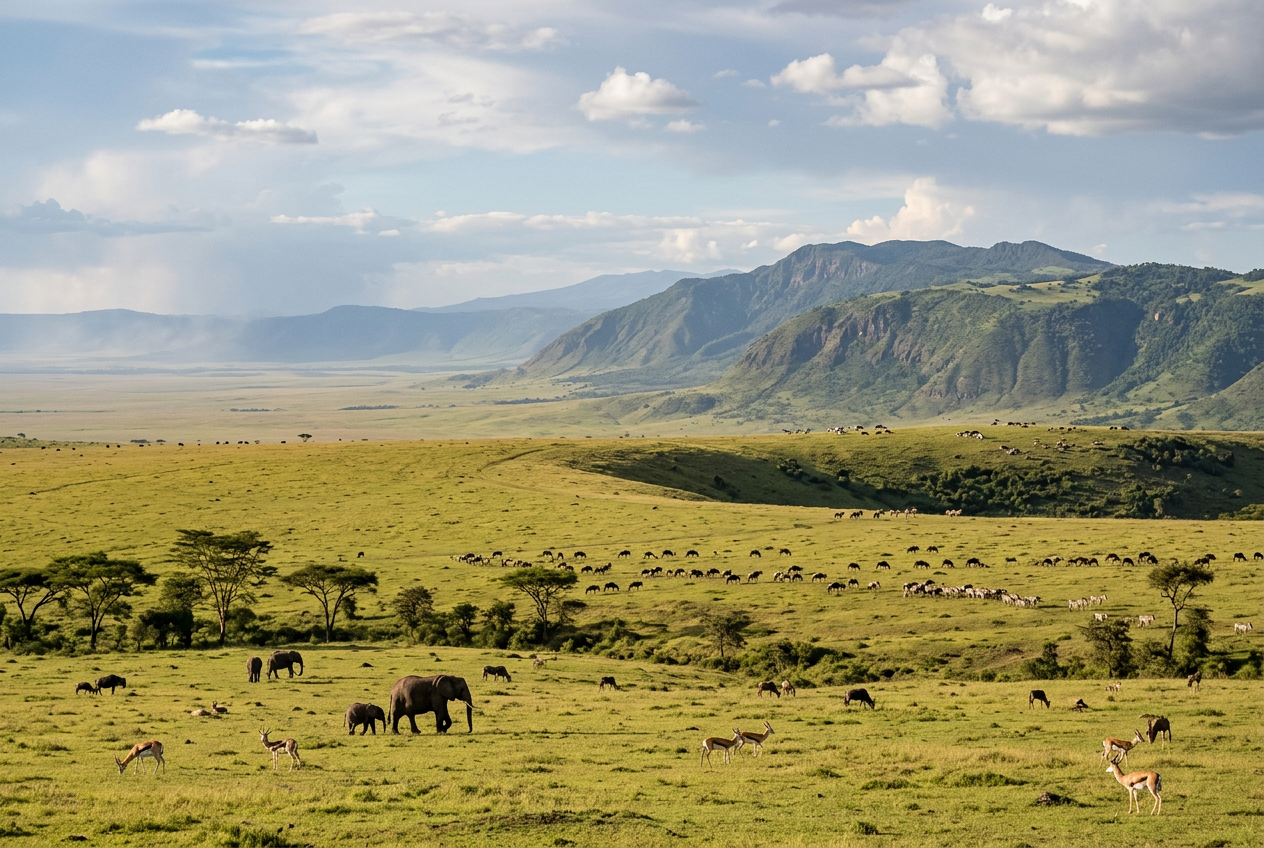
The physical geography of each country dictates the rhythm of the safari. Tanzania is a land of superlatives. It is home to Mount Kilimanjaro, the highest peak in Africa, and the Ngorongoro Crater, the world’s largest inactive volcanic caldera. The Serengeti National Park itself covers nearly 15,000 square kilometres of treeless grasslands, providing the quintessential 'Out of Africa' backdrop.
Kenya, conversely, offers a more diverse range of landscapes within shorter distances. Beyond the savannahs of the Mara, travellers can explore the arid, red-earth beauty of Samburu in the north, the dramatic scarps of the Great Rift Valley, and the iconic views of Mount Kilimanjaro from Amboseli National Park. Kenya’s topography allows for a highly varied 10-day itinerary that can include temperate highlands, semi-desert landscapes, and classic plains.
Infrastructure and Accessibility
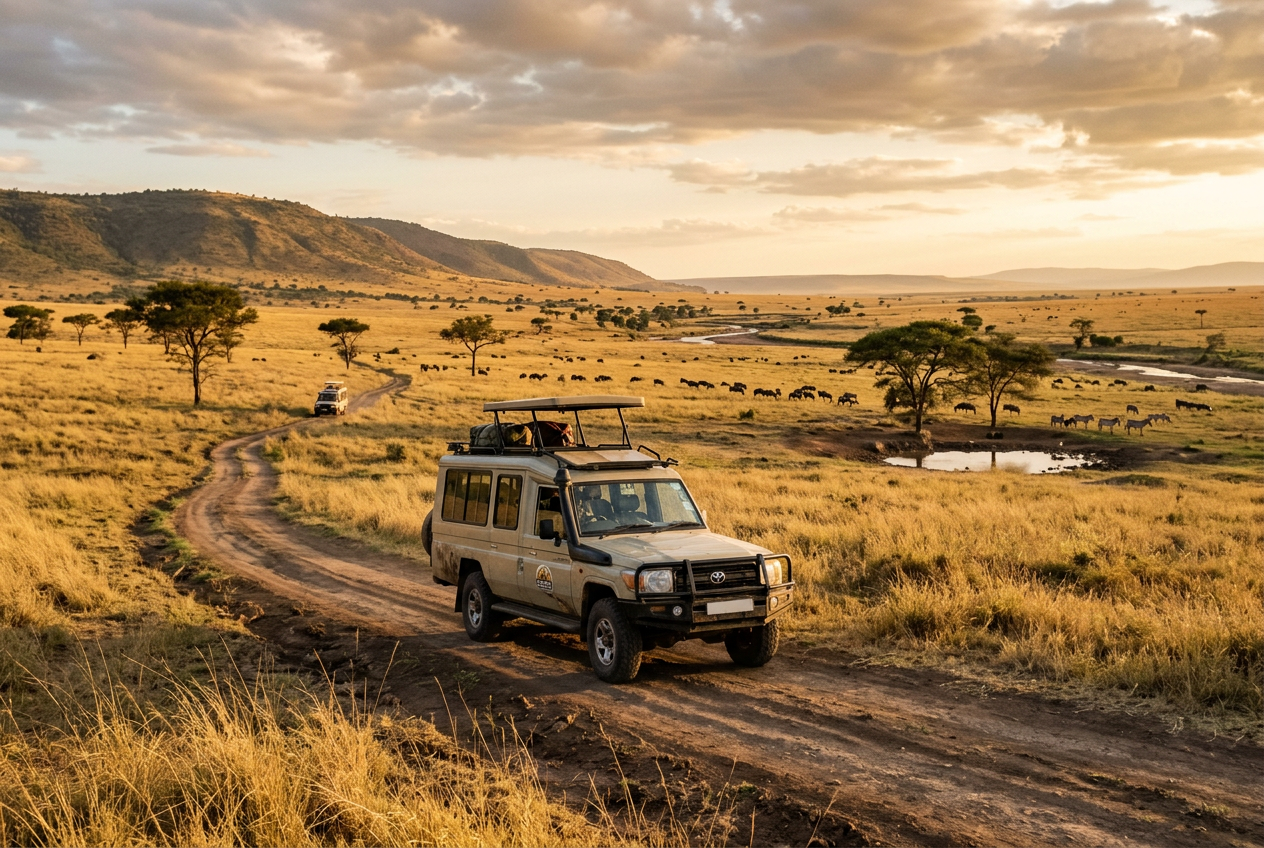
In terms of logistics, Kenya remains the regional hub for East Africa. Jomo Kenyatta International Airport (NBO) in Nairobi is well-served by British Airways from London Heathrow, with flight times averaging around 8 hours and 40 minutes. The domestic hub, Wilson Airport (WIL), provides efficient light-aircraft transfers to all major parks. A flight from Nairobi to the Maasai Mara takes approximately 45 minutes, making it an ideal choice for those who prefer to minimise travel time between camps.
Tanzania’s infrastructure has improved significantly, but the sheer scale of the country means travel times are longer. International flights typically arrive at Kilimanjaro International Airport (JRO) for the Northern Circuit or Julius Nyerere International Airport (DAR) for the Southern Circuit. In 2026, internal flight networks like Regional Air and Coastal Aviation will continue to provide the necessary links, but the distances covered are greater than in Kenya. For a multi-park Tanzania itinerary, one should expect more time in the air or in 4x4 vehicles.
The Private Conservancy Model
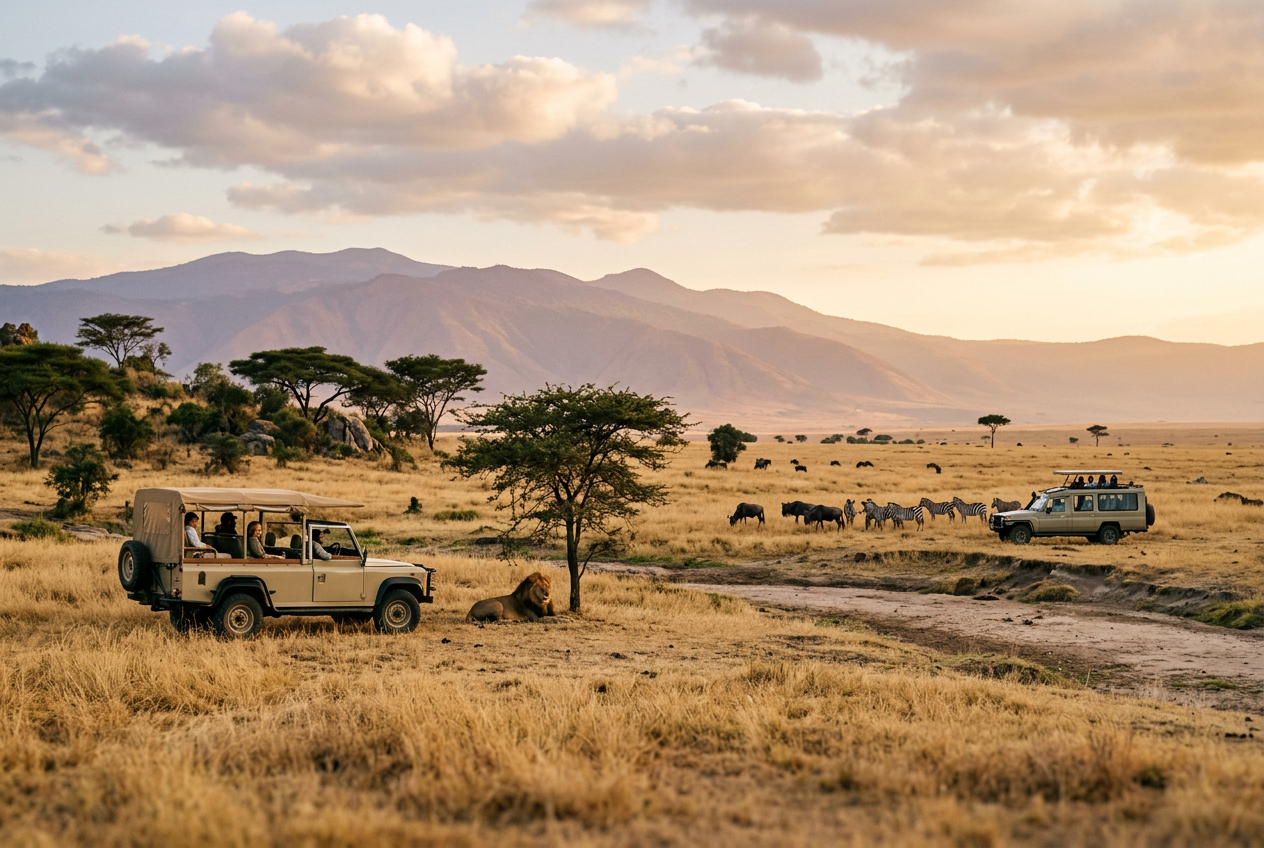
One of Kenya’s greatest advantages is its pioneering use of private conservancies. These are areas of land owned by local Maasai communities and leased to safari operators. This model has revolutionised the luxury safari 2026 market by offering a more intimate experience.
In a private conservancy, vehicle numbers are strictly controlled—often limited to one vehicle per 1,400 acres. Guests can enjoy activities strictly prohibited in national parks, such as:
- Night game drives to spot elusive nocturnal predators like leopards and aardvarks.
- Guided bush walks, allowing for a ground-level perspective on tracking and botany.
- Bush dinners and sundowners in remote locations.
- Off-road driving, which allows witnesses to get closer to significant sightings without disturbing the wildlife.
Tanzania is predominantly focused on national parks, where regulations are stricter. While this preserves the 'wild' feel, it does mean that game drives are restricted to marked tracks and daylight hours in most areas.
Best Safari Country for Families
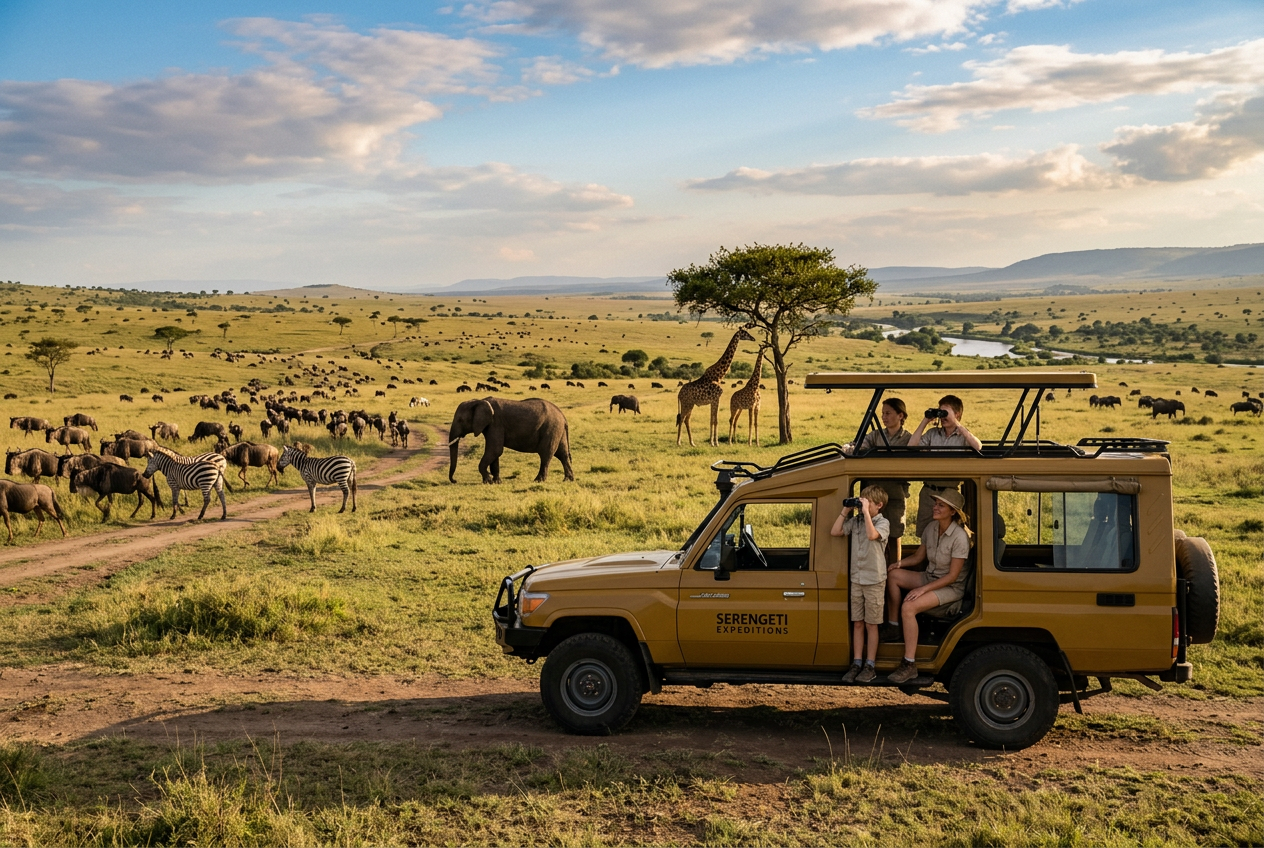
When selecting the best safari country for a multi-generational family trip in 2026, Kenya often takes the lead. Many Kenyan lodges have long histories of hosting families and offer sophisticated 'Junior Ranger' programmes. Properties like Giraffe Manor in Nairobi provide a whimsical entry point to Africa that appeals to all ages.
Tanzania is arguably better suited for families with older children or teenagers who can handle longer travel days and the slightly more rugged nature of the bush. The Ngorongoro Crater is a particular highlight for families, as the high density of 'Big Five' animals ensures that younger travellers with shorter attention spans are constantly engaged.
Cost Comparison: Budgeting for 2026
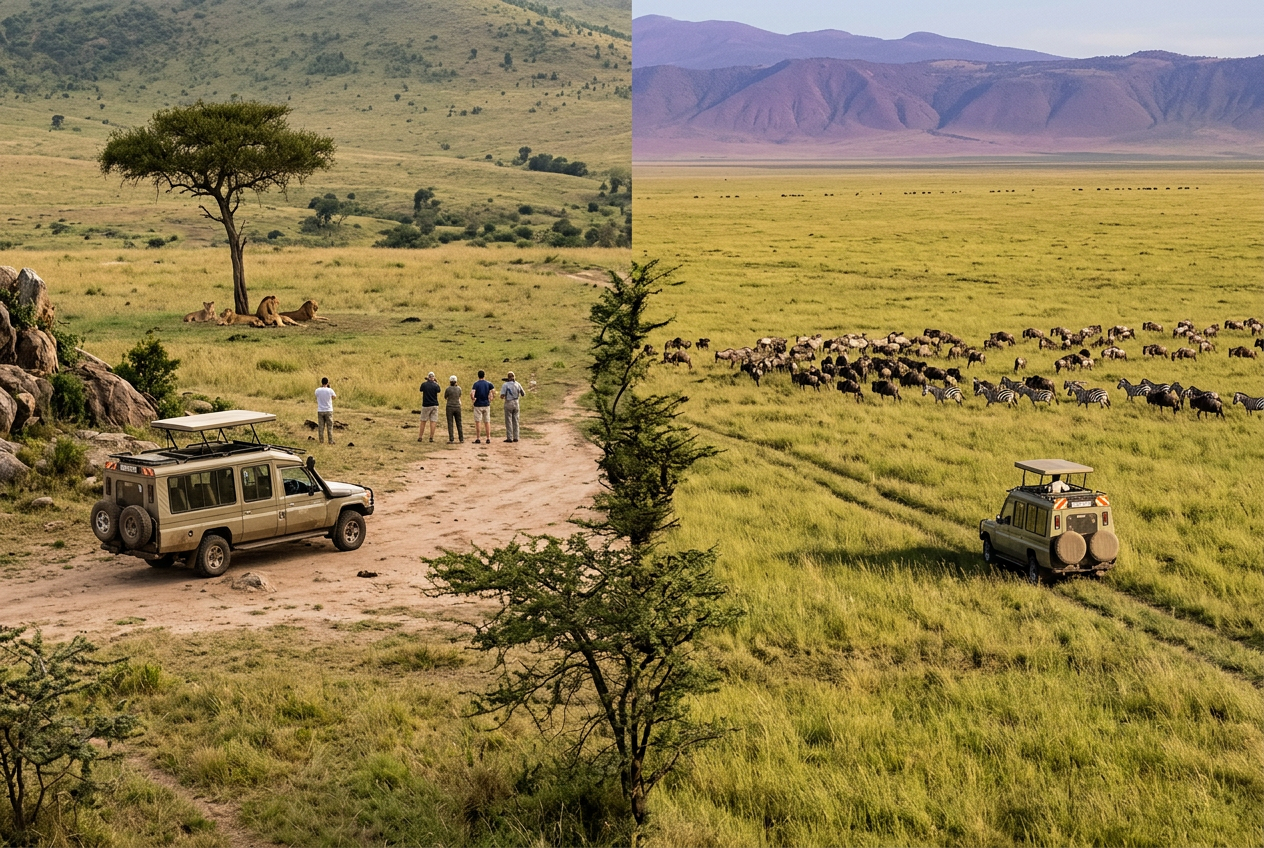
Luxury safaris in East Africa are a significant investment. In 2026, prices for a high-end, all-inclusive safari typically range from £800 to £2,500 per person, per night.
Tanzania tends to be more expensive on average. This is due to higher park fees (the Ngorongoro Crater fee alone is several hundred dollars per vehicle) and the logistical costs of operating in more remote areas. A 10-day luxury Tanzania circuit in 2026 will likely start at approximately £12,000 per person, including internal flights.
Kenya offers a broader spectrum of pricing. While ultra-luxury camps in the Mara match or exceed Tanzanian prices, the variety of accommodation and the efficiency of the flight network can make a Kenyan safari slightly more cost-effective. A comparable 10-day luxury Kenya itinerary might start at £9,500 per person.
| Feature | Kenya | Tanzania | | :--- | :--- | :--- | | Primary Park | Maasai Mara | Serengeti | | Best Time for Migration | August – October | Year-round (Movements vary) | | Iconic Landmark | Mount Kenya / Amboseli Views | Mt Kilimanjaro / Ngorongoro | | Accessibility | High (Nairobi hub) | Moderate (Multiple hubs) | | Safari Style | Private Conservancies & National Parks | Large National Parks | | Estimated Luxury Cost (10 Days) | From £9,500 pp | From £12,000 pp | | Beach Extension | Diani / Lamu | Zanzibar / Pemba |
Seasonality and Timing
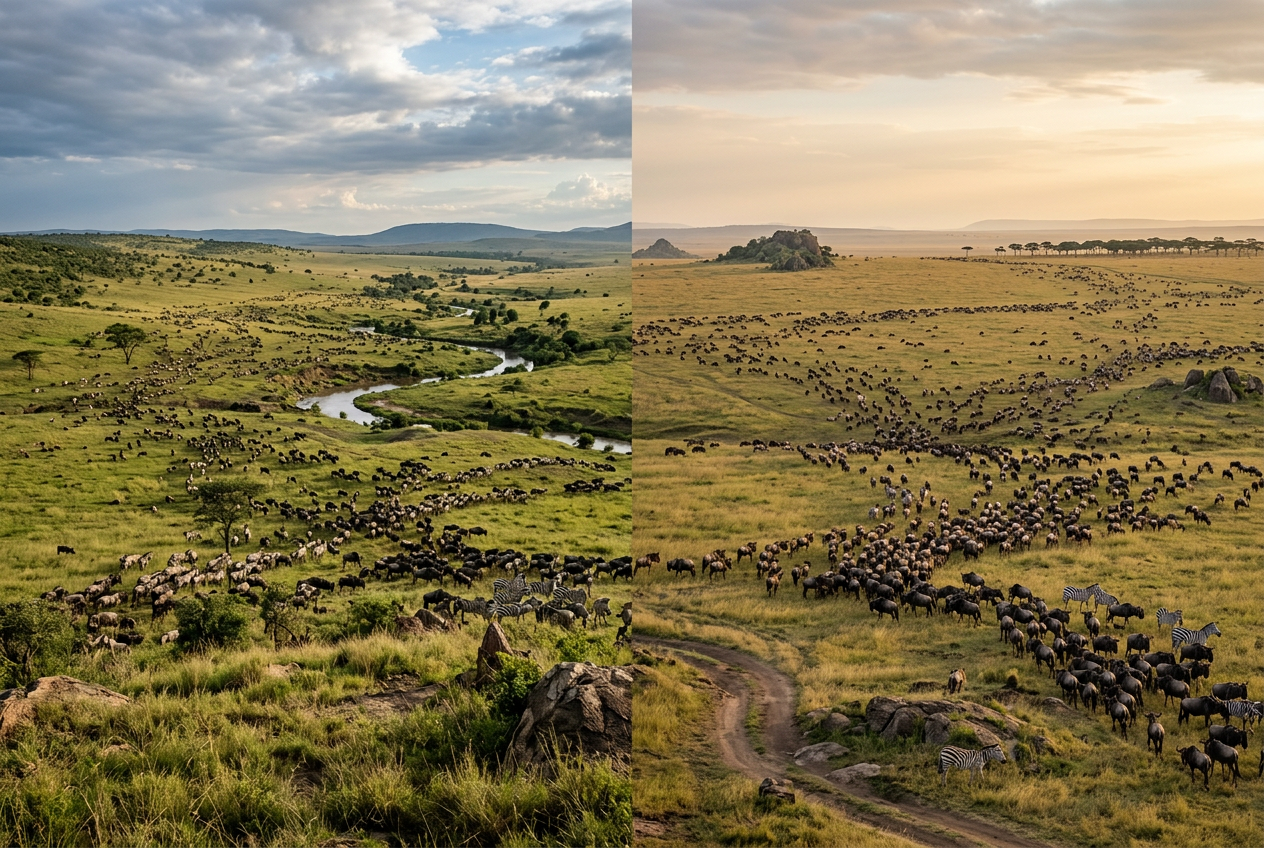
The choice between Kenya vs Tanzania safari frequently comes down to your chosen travel dates.
January – March: This is the 'green season' in Kenya, but it is the peak of the calving season in the southern Serengeti. Tanzania is the clear winner for those travelling in the first quarter of 2026.
June – October: This is the dry season for both countries and is widely considered the best time for game viewing as animals congregate around water sources. The migration begins its move into the Western Serengeti in June, reaching the Maasai Mara by August.
November – December: The 'short rains' occur across East Africa. While some lodges close, this is an excellent time for birdwatching and photography, as the dust is settled and the landscapes turn a vibrant green.
Southern Tanzania: The Untamed Frontier
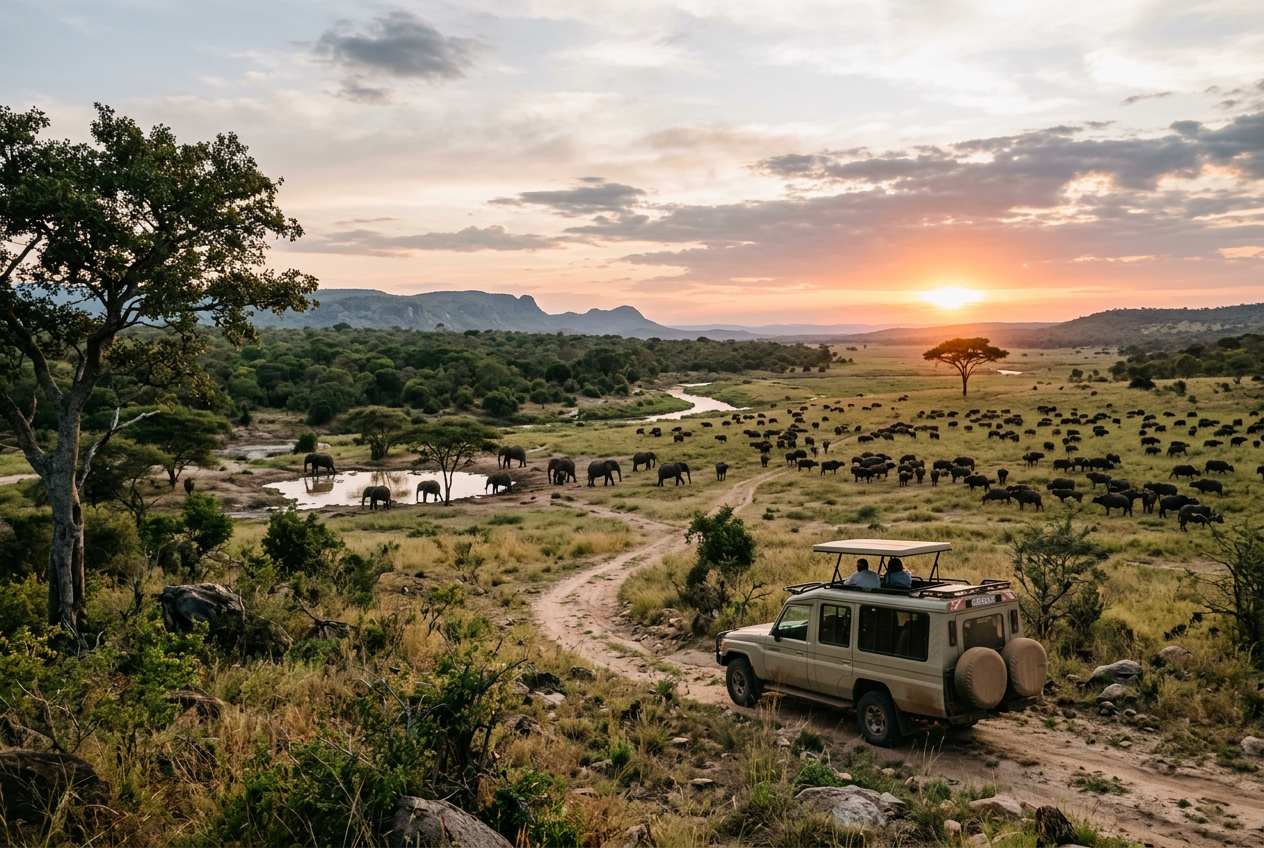
While the 'Northern Circuit' (Serengeti, Ngorongoro, Manyara) is Tanzania's most famous offering, the Southern Circuit provides a compelling alternative for the seasoned traveller. Nyerere National Park (formerly Selous) and Ruaha National Park represent some of the most expansive wilderness areas left on earth.
In 2026, Southern Tanzania will appeal to those who have 'done' the Mara and the Serengeti. Here, the experience is defined by boat safaris on the Rufiji River and walking safaris through ancient baobab forests. The exclusivity here is unmatched; you may go an entire day without seeing another safari vehicle. The Travel Co. often recommends the Southern Circuit for couples seeking a romantic and secluded retreat.
Beach Extensions: Lamu vs Zanzibar
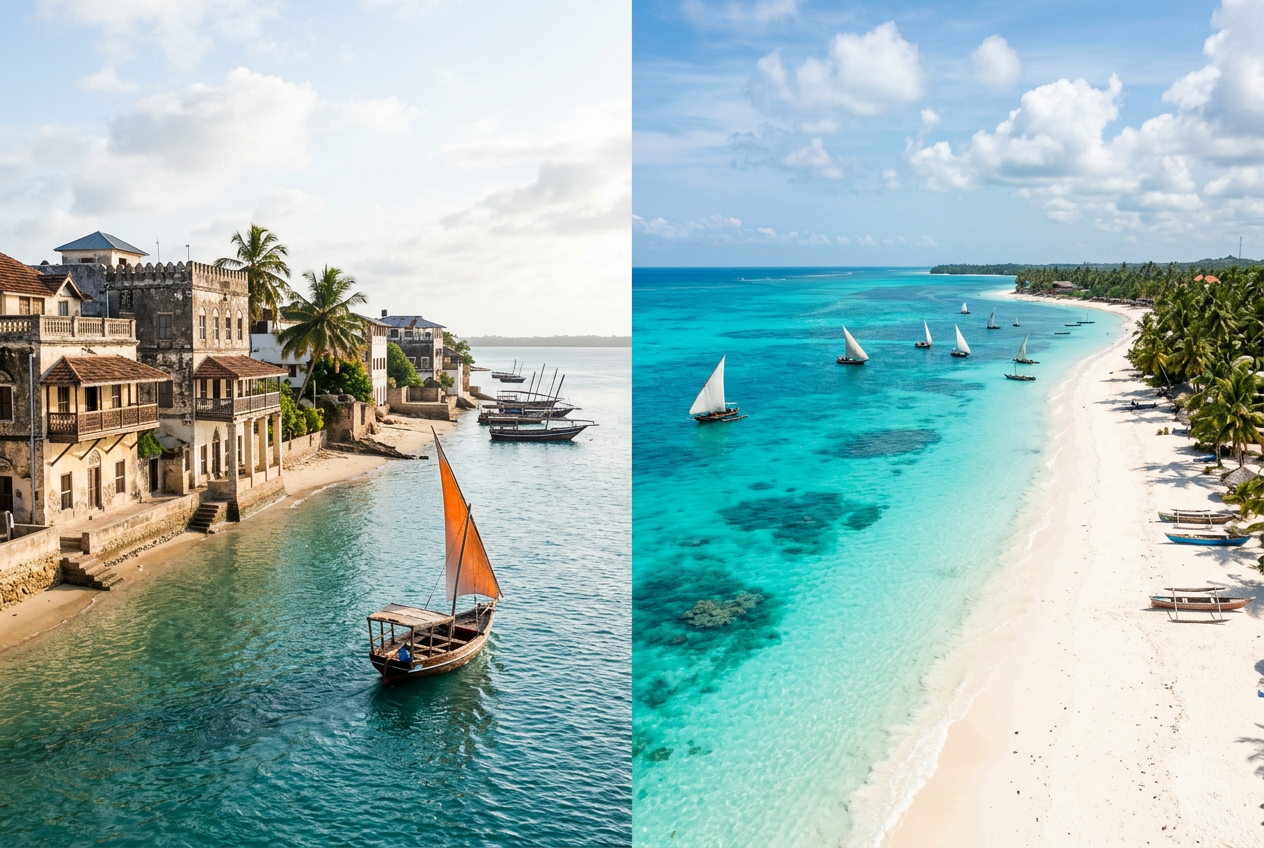
No East African safari is complete without a period of relaxation on the coast. Both nations offer stunning Indian Ocean escapes.
Kenya’s Diani Beach is famous for its long stretches of white sand and world-class kitesurfing. For a more culturally immersive experience, the archipelago of Lamu offers a car-free, Swahili-steeped environment that feels frozen in time.
Tanzania’s Zanzibar (Unguja) remains the quintessential post-safari destination. Stone Town’s labyrinthine alleys and the turquoise waters of Nungwi are iconic. For the ultimate in 2026 luxury, the private islands of Mnemba or Thanda offer a level of seclusion that is difficult to find elsewhere in the world.
Conservation and Community in 2026
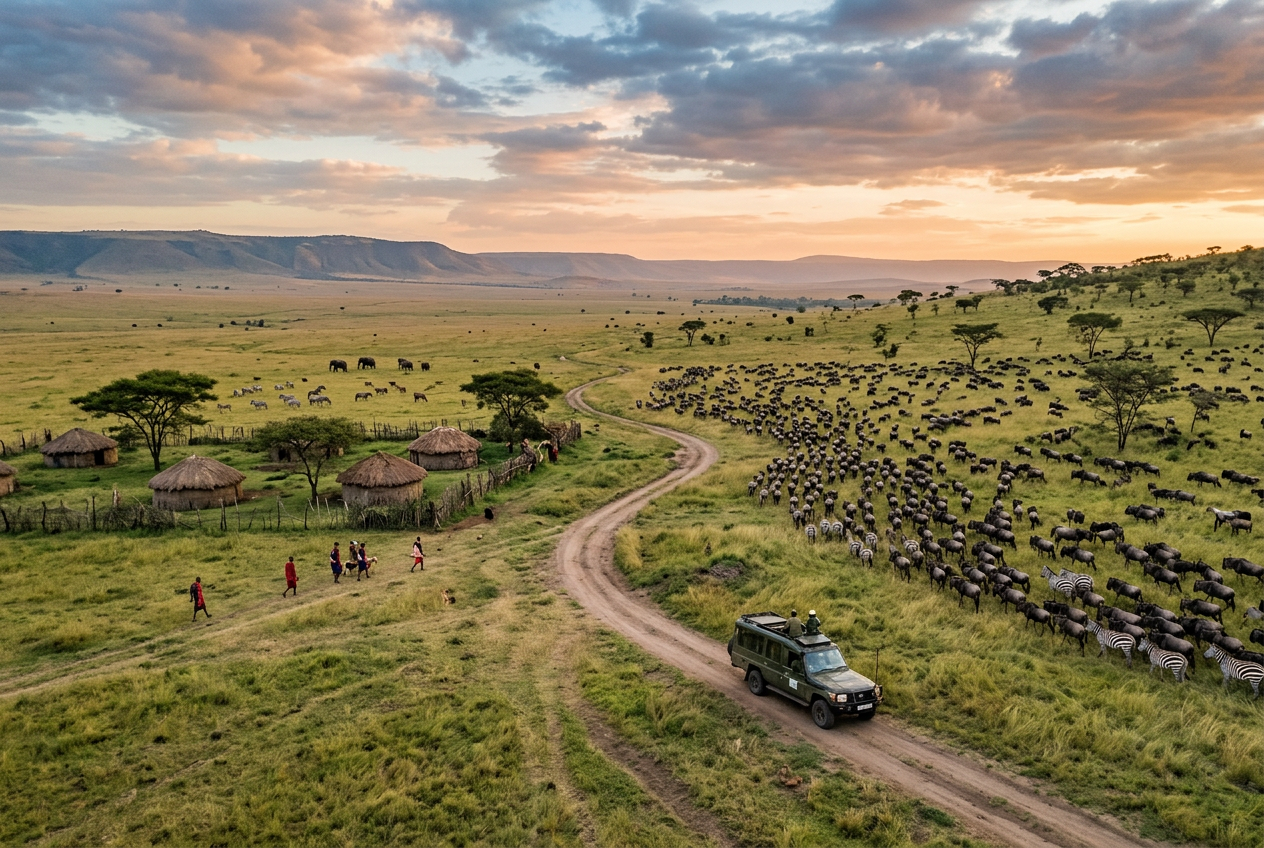
In 2026, the ethics of travel are more important than ever. Kenya’s model of involving local communities in the financial benefits of tourism is world-leading. By staying in a conservancy, guests directly fund schools, healthcare, and livestock insurance for the Maasai people.
Tanzania has also made strides, with the Frankfurt Zoological Society and other NGOs working closely with the government to protect the Serengeti ecosystem. When booking with The Travel Co., we prioritise properties that demonstrate a clear commitment to both wildlife preservation and the empowerment of local populations.
Choosing Your 2026 Safari
If you seek variety, ease of travel, and the intimacy of private conservancies, Kenya is your ideal destination. If you crave the raw scale of the African wilderness, the spectacle of the calving season, and the geological wonders of the Rift Valley, Tanzania is the better choice.
Ultimately, many of our clients find that the perfect solution is a cross-border safari, combining the best of both worlds. A typical 14-day itinerary might begin in the Serengeti, move through the Ngorongoro Crater, and conclude with three nights in the Maasai Mara before heading to the coast.
FAQ
Q: Is it safe to travel to Kenya and Tanzania in 2026? A: Yes, both countries are well-established tourism destinations. The Travel Co. only works with vetted partners and provides 24/7 support. Standard travel precautions apply, and we recommend staying in private lodges with professional security.
Q: Do I need a visa for both countries? A: Most international travellers require a visa for both Kenya and Tanzania. Kenya has recently introduced an Electronic Travel Authorisation (eTA) system, while Tanzania continues to use an e-Visa portal. We recommend applying at least 30 days before departure.
Q: Which country is better for seeing the 'Big Five'? A: Both countries offer excellent opportunities to see the lion, leopard, elephant, buffalo, and rhino. However, the Ngorongoro Crater in Tanzania is often cited as the easiest place to see all five in a single day due to its enclosed nature.
Q: Are the 'short rains' a bad time for a safari? A: Not at all. The rains are usually brief afternoon showers. The benefits include lower prices, fewer tourists, and spectacular emerald-green scenery which is perfect for photography.
Member Hotels
For those looking to secure their 2026 safari, we recommend the following properties known for their exceptional service and location:
- Angama Mara (Kenya) – Perched on the edge of the Oloololo Escarpment with breathtaking views of the Mara Triangle.
- Singita Sasakwa (Tanzania) – An Edwardian-style manor house offering ultimate luxury in the Grumeti Reserve.
- Segera Retreat (Kenya) – A sanctuary in the Laikipia Plateau focusing on the '4Cs': Community, Commerce, Culture, and Conservation.
- Four Seasons Safari Lodge Serengeti (Tanzania) – Featuring a famous watering hole where elephants frequently congregate.
- Solio Lodge (Kenya) – Located on a private rhino sanctuary, offering some of the best rhino sightings in Africa.
- Ngorongoro Crater Lodge (Tanzania) – Architecturally stunning 'maasai-baroque' suites overlooking the crater floor.
- Mara Plains Camp (Kenya) – An intimate Great Plains Conservation property located in the Olare Motorogi Conservancy.
- Mwiba Lodge (Tanzania) – A secluded retreat in a private reserve bordering the Southern Serengeti.
- Sasaab (Kenya) – A Moroccan-inspired lodge in Samburu with incredible views of the Ewaso Nyiro River.
- Chem Chem Safari Lodge (Tanzania) – Known for its 'slow safari' philosophy between Lake Manyara and Tarangire.
- Cottar’s 1920s Safari Camp (Kenya) – A vintage-style camp that harks back to the golden age of exploration.
- Gibb’s Farm (Tanzania) – A charming historic farmhouse ideal for exploring the Ngorongoro highlands.
- Ol Jogi Home (Kenya) – One of the most exclusive private houses in Africa, located in Laikipia.
- Beho Beho (Tanzania) – The premier choice for a sophisticated safari in Nyerere National Park.
- Loisaba Star Beds (Kenya) – Offering the unique experience of sleeping under the stars on raised platforms.
- Bushtops Luxury Tented Camps (Kenya & Tanzania) – Providing five-star tented luxury in both the Mara and Serengeti.
- Alfajiri Villas (Kenya) – Exclusive-use villas on Diani Beach, perfect for families post-safari.
- &Beyond Mnemba Island (Tanzania) – A private island paradise off the coast of Zanzibar.
- Saruni Samburu (Kenya) – Villas built into the volcanic rock with panoramic views of the Northern Frontier District.
- Faru Faru Lodge (Tanzania) – A contemporary riverside lodge in the Singita Grumeti reserve.
Plan your trip with The Travel Co.
Crafting a luxury safari 2026 requires meticulous planning and local expertise. At The Travel Co., we provide a bespoke service that manages every detail, from international flights and private charters to exclusive lodge bookings. As an ABTA and ATOL protected agency, your investment is fully secured, allowing you to focus entirely on the awe-inspiring wildlife of East Africa. Whether you are leaning towards the vast Serengeti or the intimate conservancies of the Maasai Mara, our editors and consultants are ready to design an itinerary that reflects your personal style. Contact our London or Dubai offices today to begin your journey.
Inspired?
Plan a trip like this
Our specialists craft every itinerary from scratch — ATOL & ABTA protected, with 24/7 in-trip support.
Enquire Now