
The Journal
Best Hiking Routes in the World: Beginner, Intermediate & Expert
A tiered guide to the planet's most rewarding trails — from gentle coastal paths to elite high-altitude expeditions.
In an age where our itineraries can feel dictated by algorithms and our experiences mediated through a screen, the simple act of placing one foot in front of the other has re-emerged as the ultimate luxury. We are witnessing a quiet renaissance in walking holidays, a collective turning away from the fly-and-flop holiday towards something more elemental and engaging. A meticulously planned trek is not merely about accumulating kilometres; it is a profound immersion into a landscape. It is about feeling the gradient of the earth beneath your boots, breathing air scented with pine or salt, and tracing ancient pathways that connect us to generations past. It is a chance to recalibrate mind and body, to find a rhythm that is dictated by sunrise and sunset rather than the relentless chime of an email notification.
This renewed appreciation for the journey itself has elevated the role of the expert guide and the curated itinerary. Whilst one can piece together a trip using online booking platforms, the true value lies in seamlessness and insider knowledge. A specialist ensures you are on the right trail for your ability, staying in the most characterful accommodation, and dining on the most authentic local fare. They handle the permits, the transfers, and the luggage, leaving you free to focus on the panorama unfolding before you. This is the difference between simply visiting a place and truly experiencing it. From gentle ambles along sun-drenched coasts to the demanding challenge of a high-altitude pass, the world’s greatest trails await. Our role is to ensure you meet them perfectly prepared, ready for an adventure that will linger long after you have unpacked.
Cinque Terre Coastal Path, Italy (Beginner)
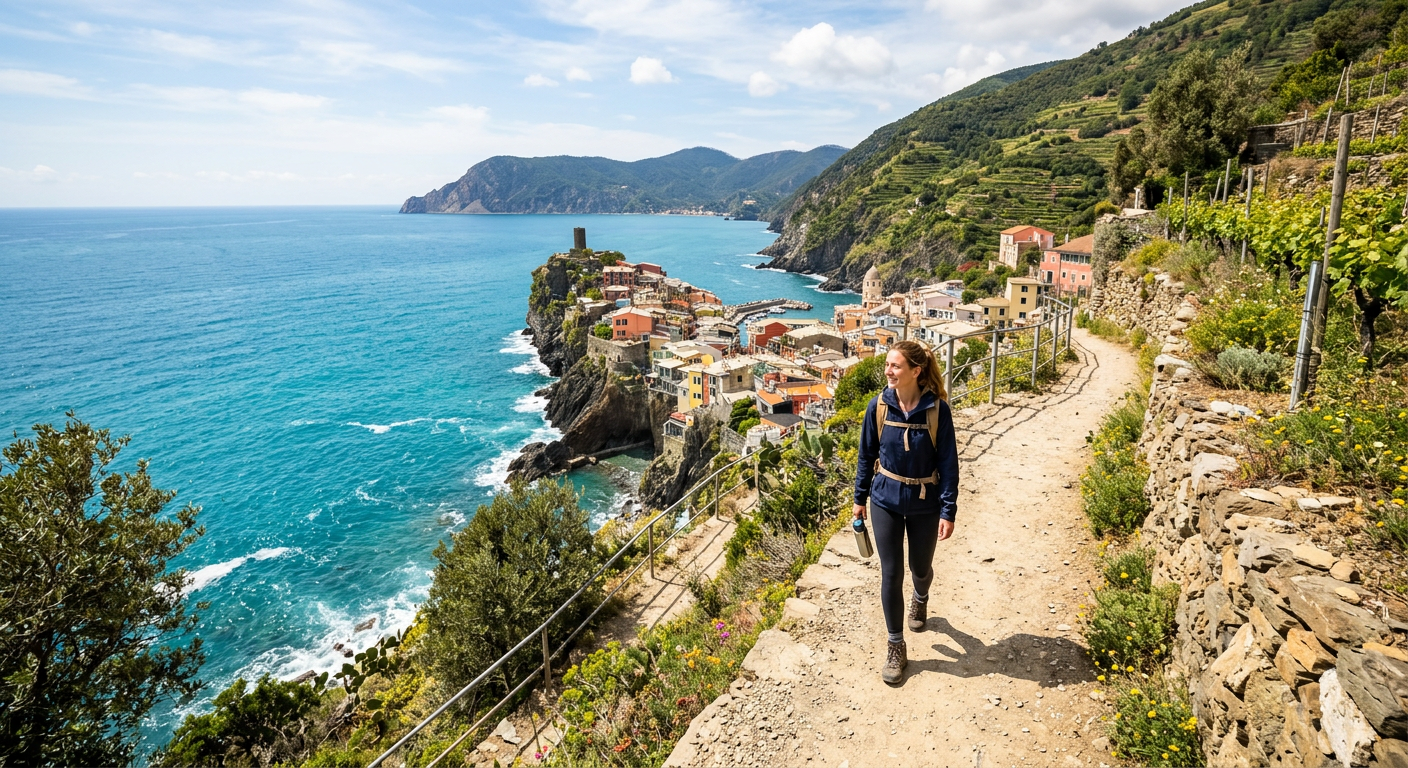
This is a walk straight from a painter’s dream. The Sentiero Azzurro, or ‘Blue Path’, threads its way along the rugged Ligurian coastline, stitching together the five impossibly picturesque villages of the Cinque Terre. Each pastel-hued hamlet seems to defy gravity, clinging to sheer cliffs that plunge into the shimmering Mediterranean. The trail itself is a sensory delight; you will wander through terraced vineyards cultivated for centuries, past fragrant lemon groves and olive trees, with the constant, soothing sound of the sea in your ears. It is less a strenuous hike and more a romantic promenade, perfectly suited for bon vivants, couples, and anyone who believes a good walk should conclude with a glass of crisp Vermentino and a plate of freshly caught anchovies. It is the epitome of ‘la dolce vita’, on foot. Whilst accessible, its popularity means that navigating the logistics and crowds alone can be a chore; a well-planned itinerary unlocks its true, relaxed charm.
Practicalities: The path can be narrow and is immensely popular, so we recommend travelling in the shoulder seasons of May or September for pleasant weather and fewer people. The total path is around 11 kilometres, but it is best enjoyed in sections over two or three days. Fly into Pisa or Genoa, from where a short train journey brings you to the heart of this UNESCO World-listed landscape.
Plitvice Lakes Boardwalk, Croatia (Beginner)
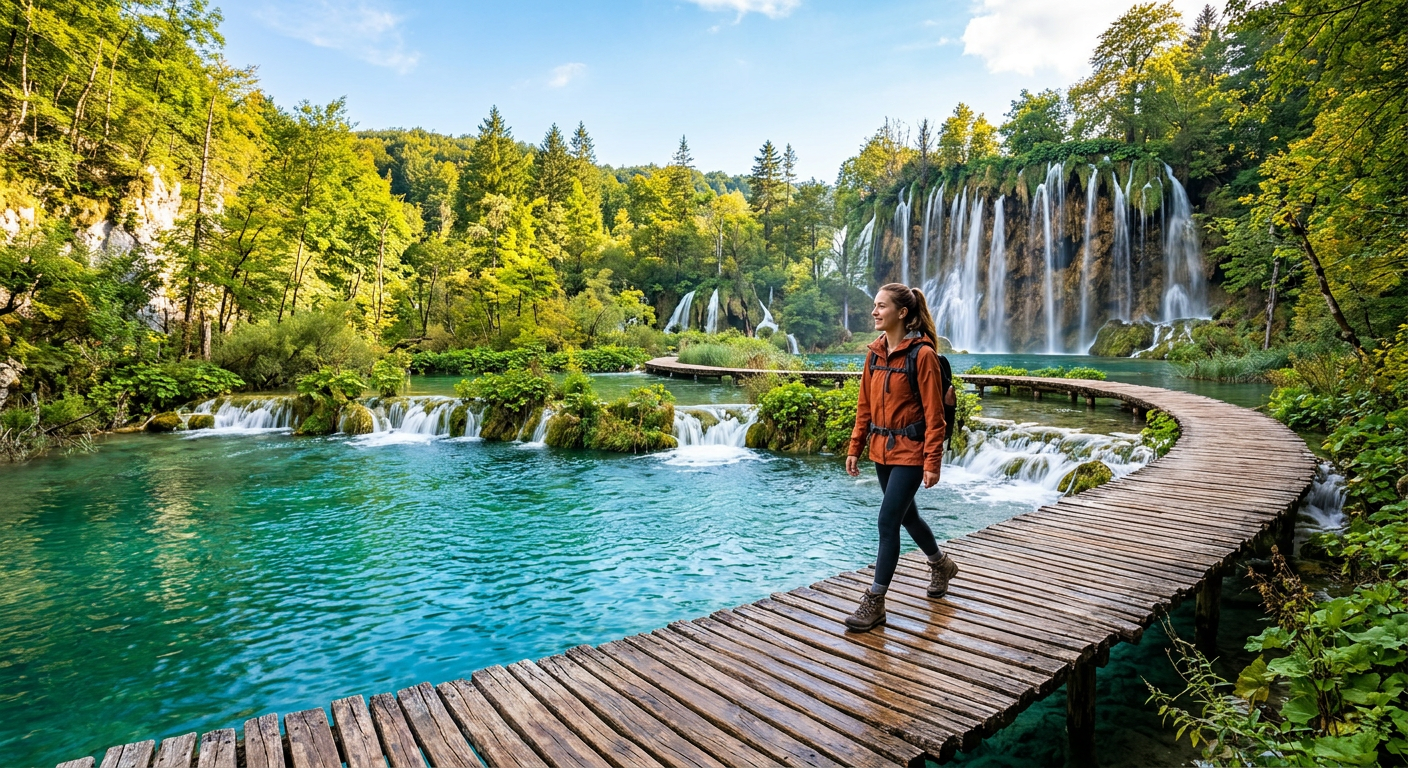
Step into a fairytale landscape of impossible blues and greens. The Plitvice Lakes National Park in Croatia is a karstic wonderland, a sequence of sixteen terraced lakes connected by a mesmerising series of cascades and waterfalls. An ingenious network of wooden boardwalks and footbridges allows you to walk directly over the crystalline water, offering an incredibly intimate perspective of this aquatic marvel. You are so close you can see the shoals of fish darting in the clear depths and feel the fine mist from the thundering falls on your face. The walking is exceptionally gentle, making it perfect for families, photographers, and those who seek spectacular natural beauty without the need for arduous climbing. The routes are well-marked and customisable, allowing for short, two-hour strolls or longer, six-hour explorations. It is a place of serene, almost ethereal beauty that demonstrates nature as the ultimate artist.
Practicalities: This is a destination where Croatia’s excellent value can be appreciated. To avoid the significant summer crowds, aim for late spring (May-June) or early autumn (September-October) when the foliage is spectacular. The park is located a couple of hours’ drive from Zagreb or Zadar, making for a superb stop on a wider Croatian itinerary. Booking tickets in advance online is essential during peak periods.
Tongariro Northern Circuit Day-Walks, New Zealand (Beginner)
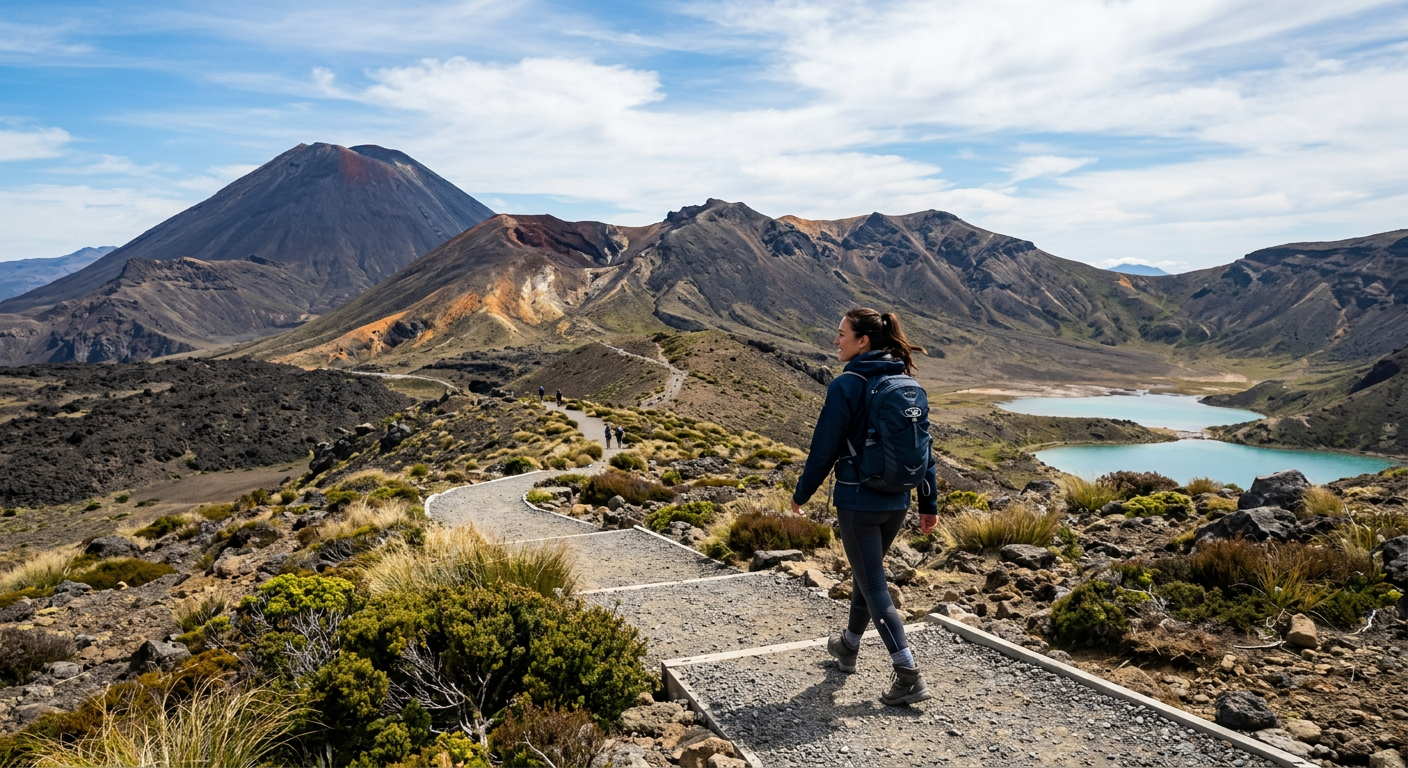
For those seeking epic, cinematic landscapes, the volcanic heart of New Zealand’s North Island is unbeatable. Whilst the full Northern Circuit is a multi-day tramp, its most spectacular sections are accessible as beginner-friendly day-walks. This is a primordial world of stark beauty, dominated by the brooding volcanic cones of Tongariro, Ngauruhoe (instantly recognisable to film fans as Mount Doom), and Ruapehu. Walks here take you across vast, rust-coloured craters, past emerald-green lakes fuming with geothermal activity, and through unique alpine herb fields. The drama of the landscape is immense, offering a palpable sense of the earth’s power. By tackling it in manageable day-sized portions from a comfortable base, you can experience its grandeur without the commitment of a full pack and overnight stays in basic huts. It suits active travellers and geology enthusiasts who crave scenery on a monumental scale.
Practicalities: New Zealand is a long-haul destination, so it rarely features in searches for 'cheap holidays', but planning well in advance can secure more reasonable flight prices. The prime walking season is during New Zealand’s summer (December to March). Fly into Auckland and then take a scenic drive or regional flight south towards the Tongariro National Park. The weather is notoriously changeable, so even on a day walk, layers and waterproofs are essential.
The Camino Portugués Coastal Way (Beginner)
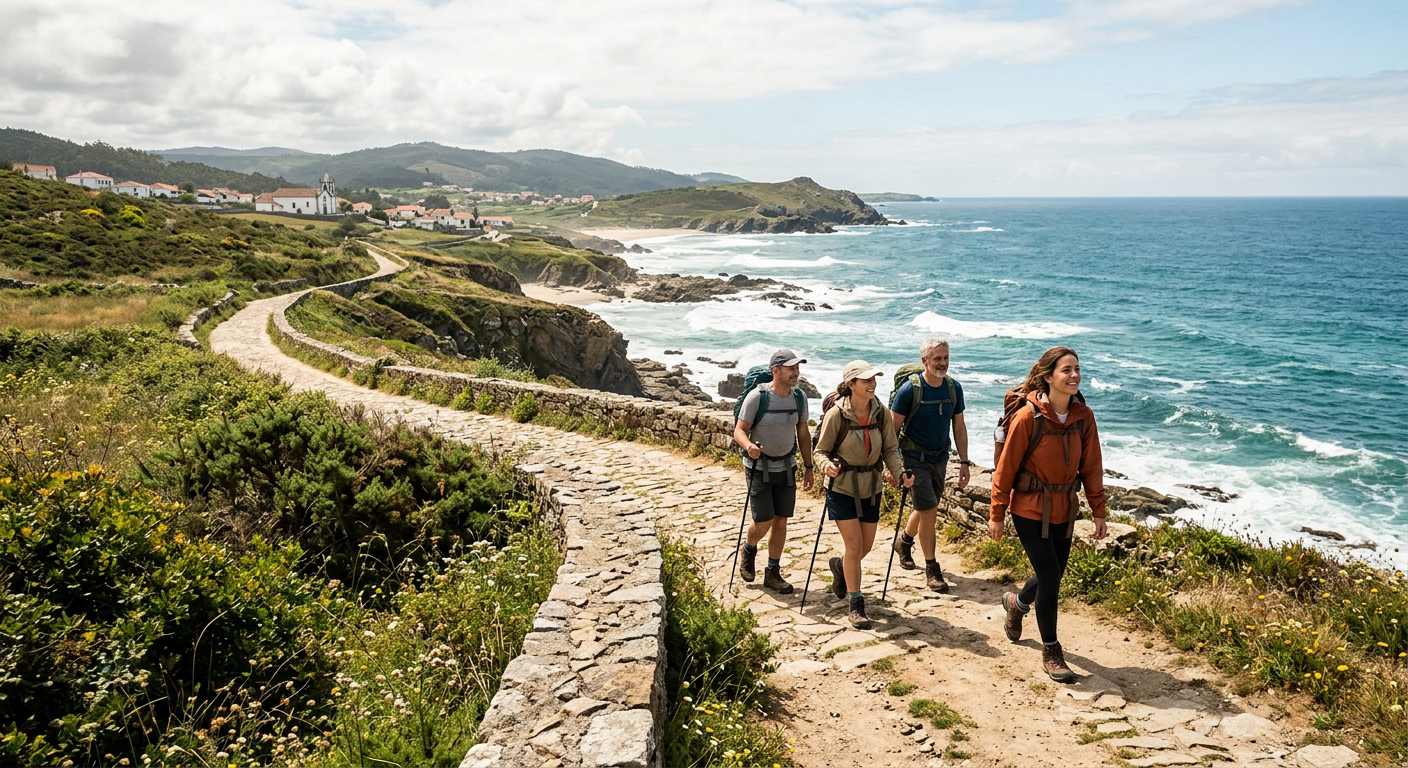
Whilst the famous Camino de Santiago has many starting points, the Portuguese Coastal Way is arguably its most beautiful and serene introductory route. Beginning in the vibrant city of Porto, this path hugs the wild Atlantic coastline of northern Portugal before winding inland through the verdant countryside of Galicia in Spain. Unlike the busier inland routes, the Coastal Way offers solitude and immense natural beauty. You will traverse windswept beaches, wander through fragrant eucalyptus forests, and pass through charming fishing villages where you can feast on the freshest seafood. The walking is predominantly flat and on well-defined tracks, making it physically accessible for anyone with a decent level of fitness. It perfectly suits solo travellers seeking reflection, couples wanting a shared journey, or anyone wishing to experience the spirit of the Camino without the crowds. It is a pilgrimage of sea, sky, and soul.
Practicalities: The route is well-supported with guesthouses and cafés, offering great value compared to other European walking 'package holidays'. The best time to walk is in the spring (April-May) or autumn (September-October) to avoid the summer heat. Flying into Porto is straightforward from most major European hubs, and the starting point of the trail is easily reached from the city centre.
Yosemite Mist Trail, USA (Beginner-Intermediate)
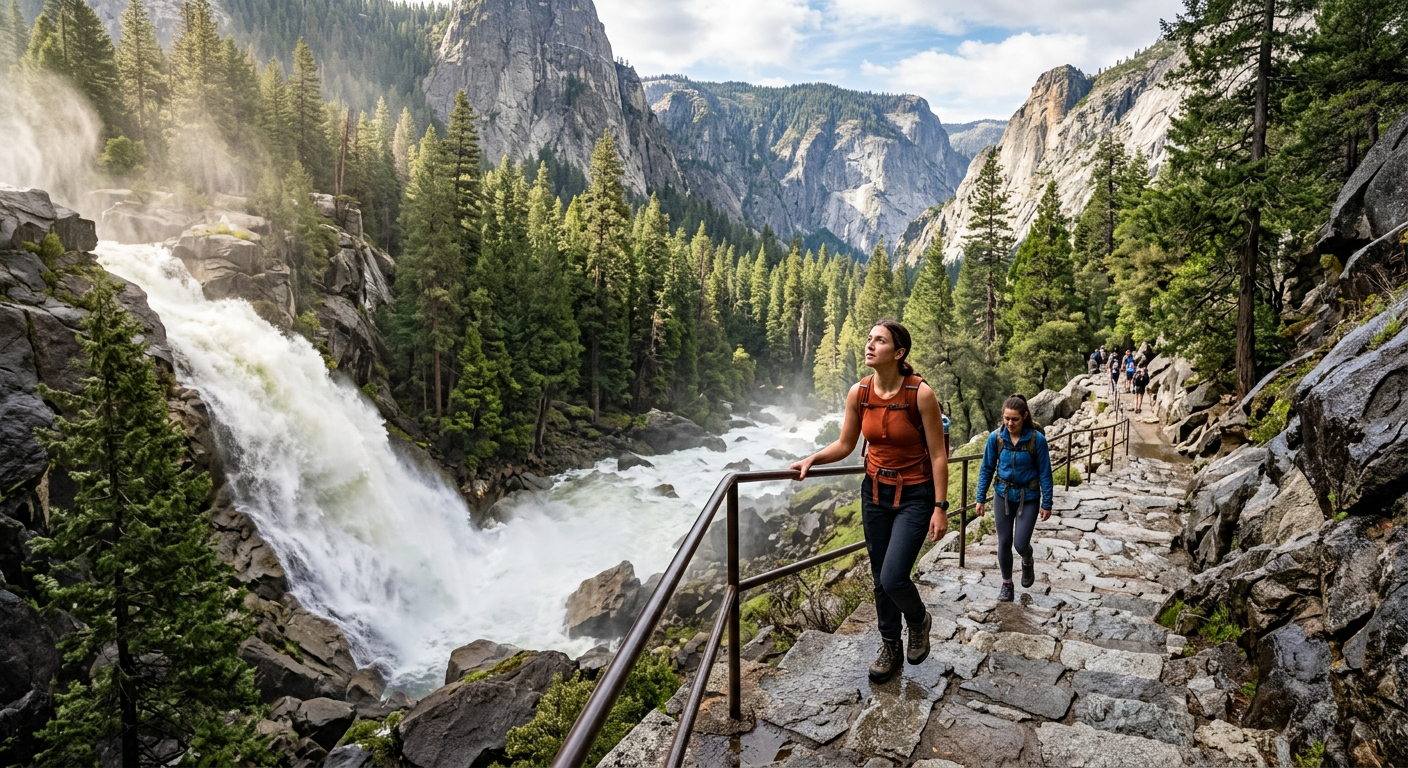
This is arguably the signature day-hike in the iconic Yosemite National Park, a short but thrillingly intense ascent that rewards walkers with thunderous, up-close encounters with two magnificent waterfalls. The ‘beginner’ part of the trail is the paved, gentle path leading to the Vernal Fall footbridge. From here, it becomes ‘intermediate’ as you climb the Mist Trail proper: a steep, narrow staircase of over 600 granite steps slick with spray from the colossal cascade of Vernal Fall. You are so close that you will be enveloped in its drenching mist – a welcome refreshment on a warm day. Continuing higher brings you to the top of Vernal Fall and then onwards to the equally spectacular Nevada Fall. It’s a rewarding challenge that offers a taste of the Sierra Nevada’s vertical granite world, ideal for fit families and active travellers wanting a classic American wilderness experience that packs a punch in just a few hours.
Practicalities: Late spring and early summer are the best times to go when the snowmelt feeds the falls, turning them into roaring torrents. The park is exceptionally popular, so pre-booking your park entry is often mandatory. The trail can be slippery and crowded; an early start is highly recommended. The nearest major airports are Fresno, Sacramento, and San Francisco, all several hours’ drive away.
Tour du Mont Blanc, France-Italy-Switzerland (Intermediate)
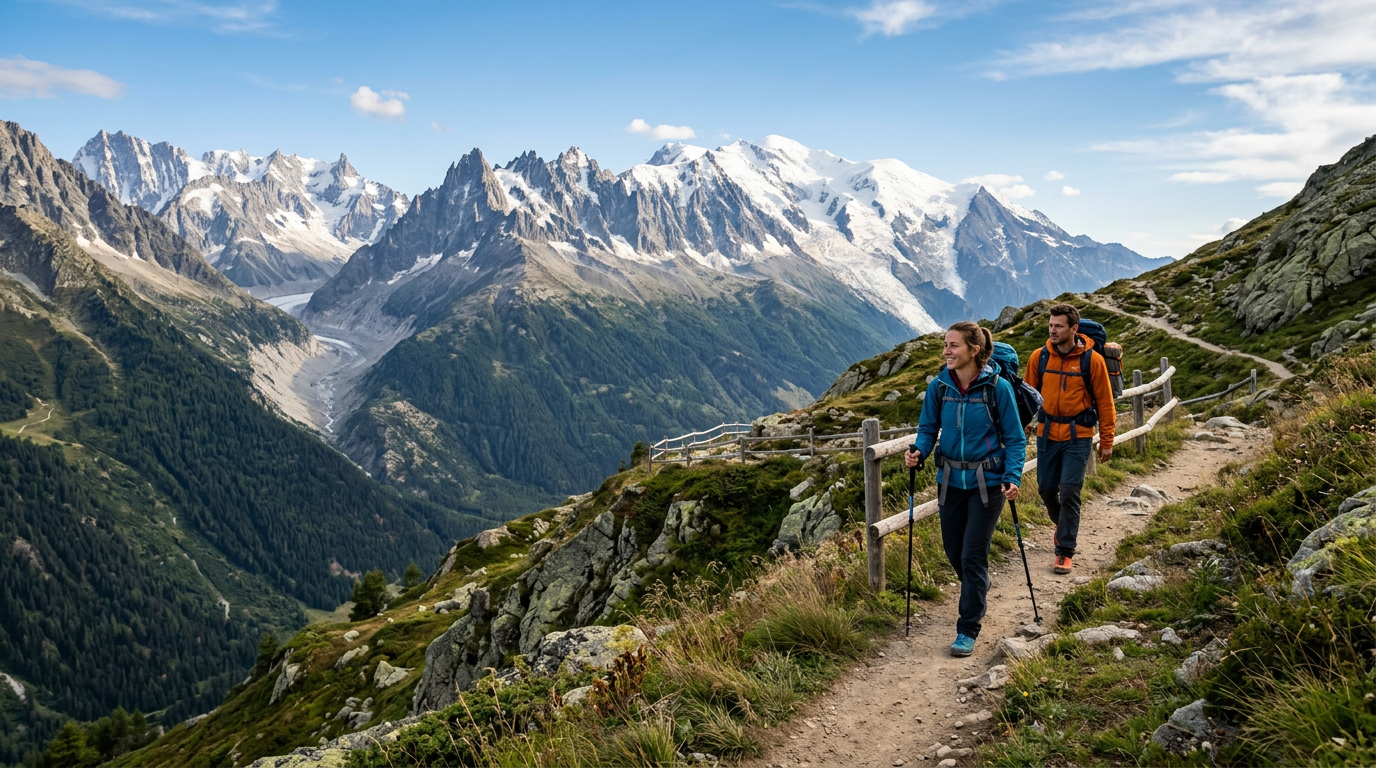
The Tour du Mont Blanc, or TMB, is the quintessential classic European alpine trek. This 170-kilometre circuit circumnavigates the majestic Mont Blanc massif, taking you through three countries, each with its own distinct culture, cuisine, and character. One day you might be enjoying a lunch of French cheese and charcuterie with a view of glistening glaciers, the next sipping a perfect Italian espresso before tackling a high pass. The scenery is relentlessly spectacular: lush meadows blanketed in wildflowers, sharp granite spires scraping the sky, and airy crossings over high mountain cols. The path is well-trodden and the daily stages are manageable for a walker with good hill fitness, typically ending at a comfortable mountain refuge or charming valley hotel. It is perfect for those who want to experience the grandeur of the Alps on a multi-day journey without needing technical mountaineering skills, offering a social and incredibly rewarding adventure.
Practicalities: The trekking season is short, from late June to mid-September. Mountain huts get booked up months in advance, which is why opting for a curated itinerary that handles all logistical arrangements is the wisest choice. The starting point for most is the Chamonix valley, easily accessible via a transfer from Geneva Airport (GVA). This is a classic walking holiday where the investment pays dividends in glorious memories.
The West Highland Way, Scotland (Intermediate)
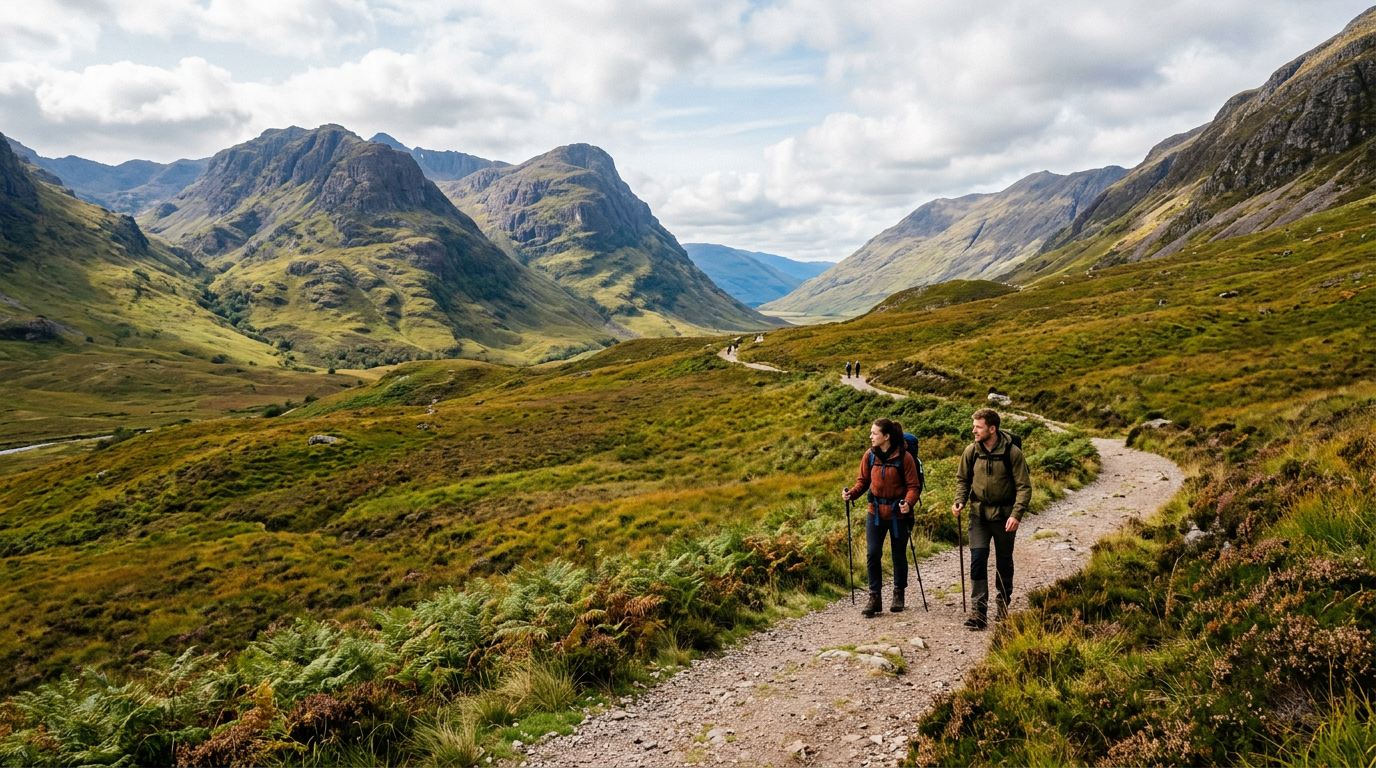
This is Scotland’s most beloved long-distance trail, a 154-kilometre journey from the outskirts of Glasgow to the foot of Britain's highest mountain, Ben Nevis. The path unfurls a perfect tapestry of classic Highland scenery, from the bonnie banks of Loch Lomond to the vast, melancholy expanse of Rannoch Moor, and through the dramatic, brooding valley of Glencoe. The challenge here is not so much altitude as it is endurance and the famously fickle Scottish weather, which can change from brilliant sunshine to driving rain in a matter of minutes. The walk is a full immersion in Scottish history and culture, following old drovers’ roads and military tracks, with the promise of a welcoming pub and a dram of single malt at the end of each day’s walk. It is perfectly suited for resilient walkers who appreciate rugged landscapes and hearty hospitality, and who don’t mind a bit of ‘dreich’ weather along the way.
Practicalities: The trail is best tackled in May or September when the weather is often more settled and the dreaded summer midges are less of a problem. Accommodation along the route, particularly in smaller villages, should be booked well in advance. The start in Milngavie is easily reached by a short train ride from Glasgow, and the end-point in Fort William is well connected for your onward journey.
Laugavegur Trail, Iceland (Intermediate)
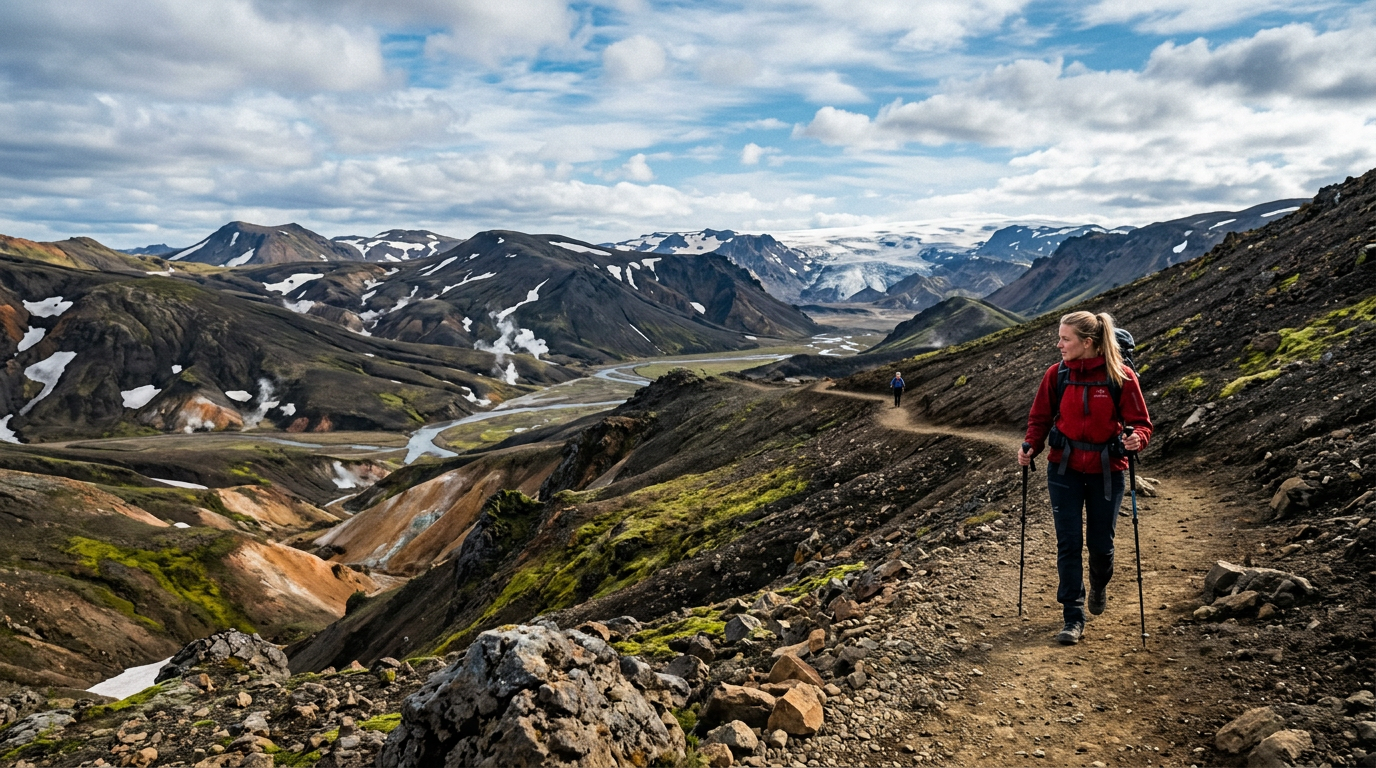
Walking the Laugavegur Trail is like trekking across a newly formed planet. This 55-kilometre route in the southern Icelandic Highlands presents a landscape so surreal and otherworldly it almost defies description. Over four to five days, you will traverse a mind-bending spectrum of scenery: trekking across rainbow-hued rhyolite mountains, navigating vast black obsidian lava fields, crossing glacial rivers, and witnessing steam hissing from geothermal vents in the ground. The trail begins in the colourful, geothermally active Landmannalaugar area and ends in the lush, greener valley of Þórsmörk, the ‘Valley of Thor’. It’s a true wilderness experience that requires self-sufficiency and a spirit of adventure. It is for the experienced hiker who is comfortable with basic hut accommodation, unpredictable weather, and who wishes to witness the raw, creative power of nature at its most dramatic.
Practicalities: The trekking window is extremely short, generally from late June to the beginning of September, when the route is largely snow-free. Hut and campsite bookings are mandatory and fill up almost a year in advance. This is a trek where expert guidance adds immense value, particularly with logistics and navigating the potentially hazardous river crossings. Fly into Keflavík (KEF) and take a specialist bus service to the trailhead. Iceland is not a destination for 'cheap flights', but the experience is utterly priceless.
Inca Trail to Machu Picchu, Peru (Intermediate)
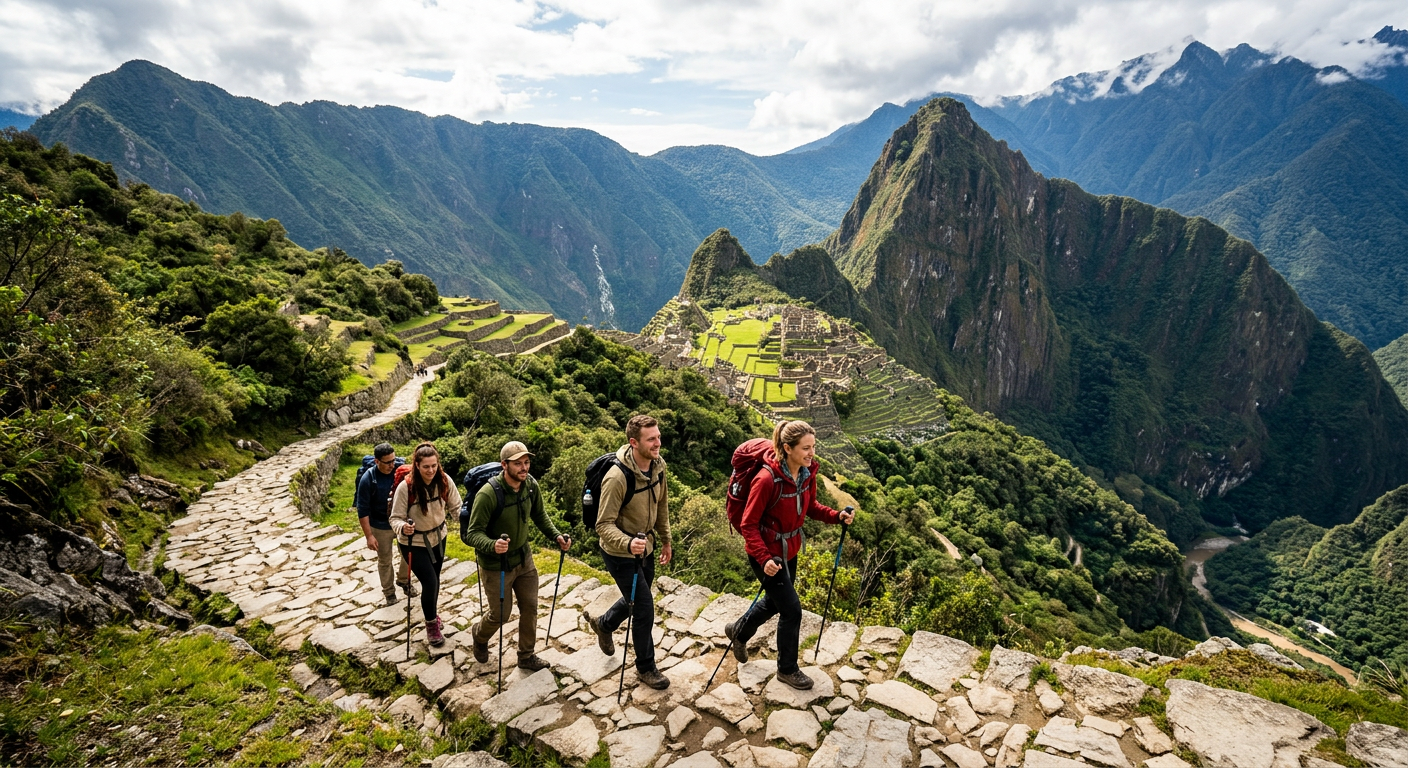
This is more than a trek; it is a pilgrimage through time. The Classic Inca Trail is one of the world’s most famous walks for good reason, combining staggering Andean scenery with a palpable sense of ancient history. Over four days, you will walk on the very stones laid by the Incas five centuries ago, ascending through diverse ecosystems from lush cloud forest to barren high-altitude passes. You will discover lesser-known but equally fascinating ruins along the way, each one building the anticipation for the grand finale. The physical challenge is significant, primarily due to the altitude, with the highest point, Dead Woman’s Pass, reaching 4,215 metres. But the true reward is arriving at the Sun Gate at dawn and seeing the lost city of Machu Picchu emerge from the morning mist below you. It is an unforgettable, almost spiritual experience, perfectly suited to the culturally curious trekker with a bucket list to tick and a good level of fitness.
Practicalities: Access to the Inca Trail is strictly controlled with a limited number of permits issued daily, which often sell out six to nine months in advance. Consequently, booking a tour with a licensed operator is not just recommended, it is mandatory. You must fly into Cusco and spend at least two days acclimatising to the altitude before starting the trek. Forget 'last minute deals'; this is an adventure that requires serious forward planning.
Kumano Kodo Nakahechi Route, Japan (Intermediate)
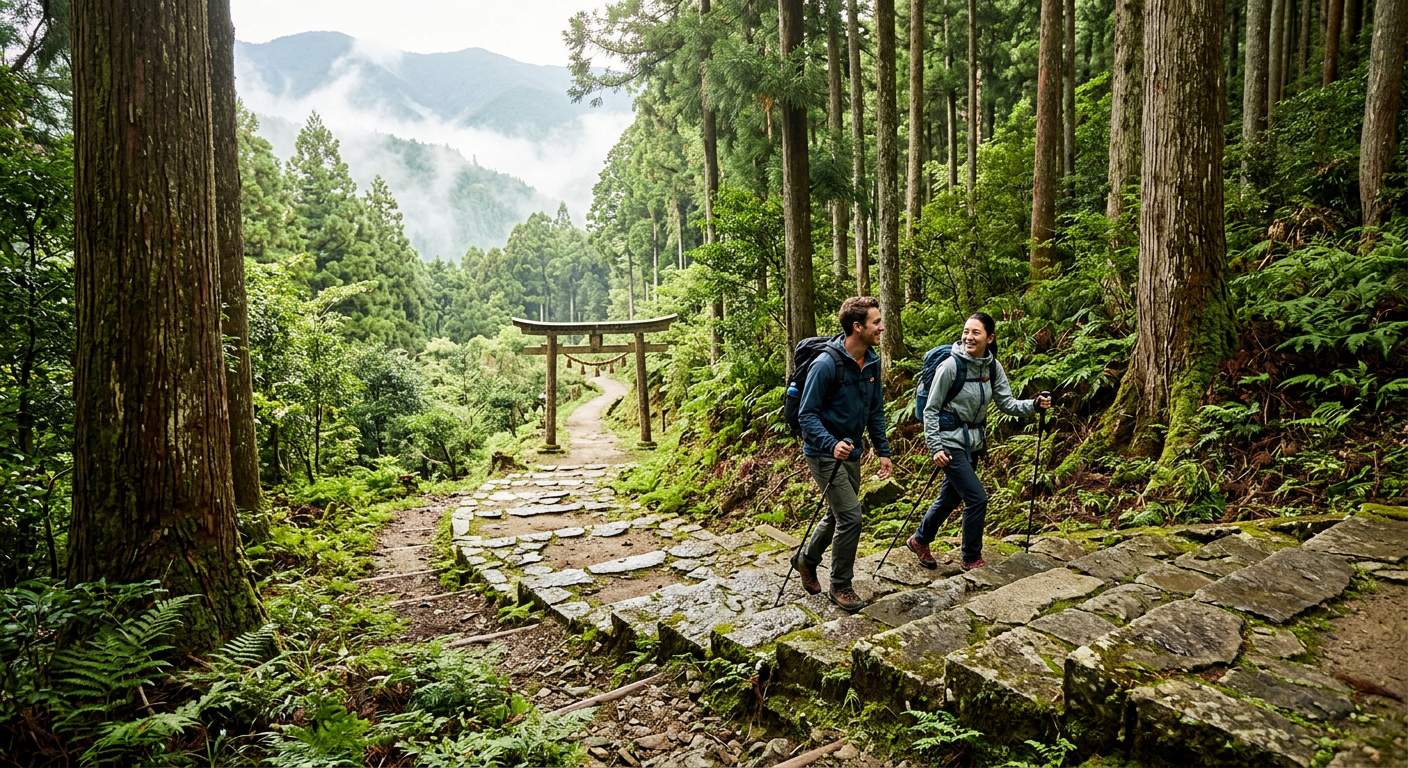
For those who believe a walk should nourish the soul as much as it challenges the body, the Kumano Kodo is a sublime choice. This network of ancient pilgrimage trails criss-crosses the sacred Kii Mountains of Japan and has been walked by emperors and samurai for over a thousand years. The Nakahechi route is the most popular and well-preserved, leading you through ethereal cedar and cypress forests, past serene Shinto shrines and Buddhist temples, and over countless small passes known as ‘toge’. It is a journey of quiet contemplation. The sense of deep-rooted spirituality is ever-present, a silent companion to the sound of your footsteps on the mossy stone paths. The experience is elevated by staying in traditional family-run inns, known as ryokan or minshuku, where you can soak in natural hot springs (onsen) and enjoy exquisite multi-course local cuisine (kaiseki). It is perfect for the discerning traveller seeking cultural immersion and a meditative escape.
Practicalities: The best seasons are spring (late March-April) for the cherry blossoms and autumn (October-November) for the vibrant foliage. The walking itself is not excessively strenuous, but involves daily ascents and descents. A guided journey is invaluable for navigating the logistics and unlocking the deep cultural context of the trail. The most common gateway is to fly into Osaka’s Kansai International Airport (KIX) and then take a train to the Kii Peninsula.
Annapurna Circuit, Nepal (Expert)
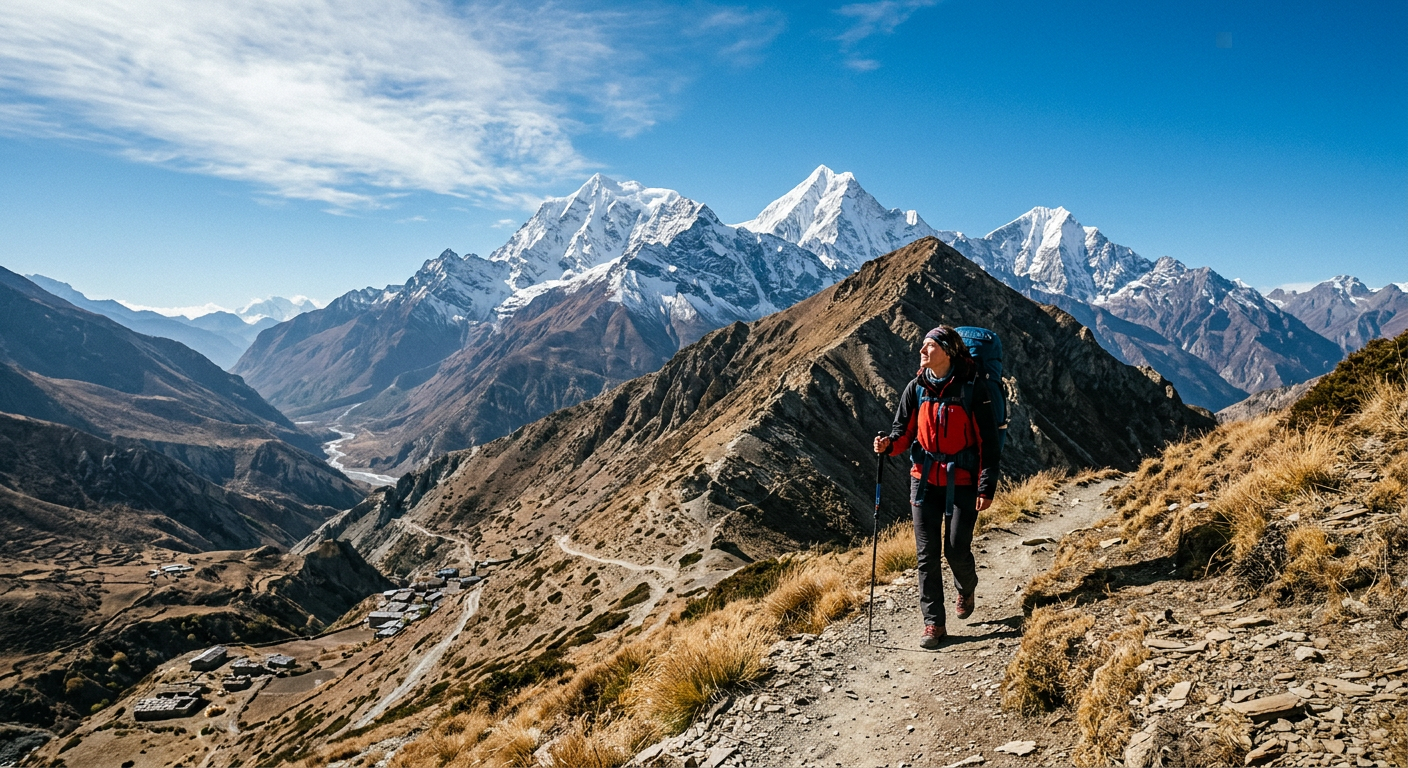
The Annapurna Circuit is a true Himalayan classic, often hailed as one of the most diverse and magnificent treks on Earth. In its entirety, this is a multi-week expedition that takes you on a grand tour of the Annapurna massif. The journey begins in lush, subtropical valleys dotted with rice paddies and poinsettia trees, inhabited by Hindu farming communities. As you ascend, the landscape transforms—pine forests give way to an arid, high-altitude desert reminiscent of Tibet, and the culture shifts to predominantly Buddhist. The pinnacle of the trek is crossing the formidable Thorong La pass at 5,416 metres, a monumental achievement that rewards you with breathtaking panoramas of snow-capped giants. This is a trek for the seasoned, resilient walker who desires a deep, long-form immersion into the Himalayas and is prepared for the serious challenge of extreme altitude. The teahouse culture along the route provides a unique and welcoming social fabric to the adventure.
Practicalities: This is a serious undertaking requiring at least two to three weeks. Proper acclimatisation is non-negotiable. The main seasons are spring (March-May) and autumn (October-November). Flying into Kathmandu (KTM) is the first step, followed by a bus or flight to the trailhead near Besisahar or a flight to Pokhara to begin. A guide and porter are highly recommended for safety, navigation, and local insight.
Everest Base Camp Trek, Nepal (Expert)
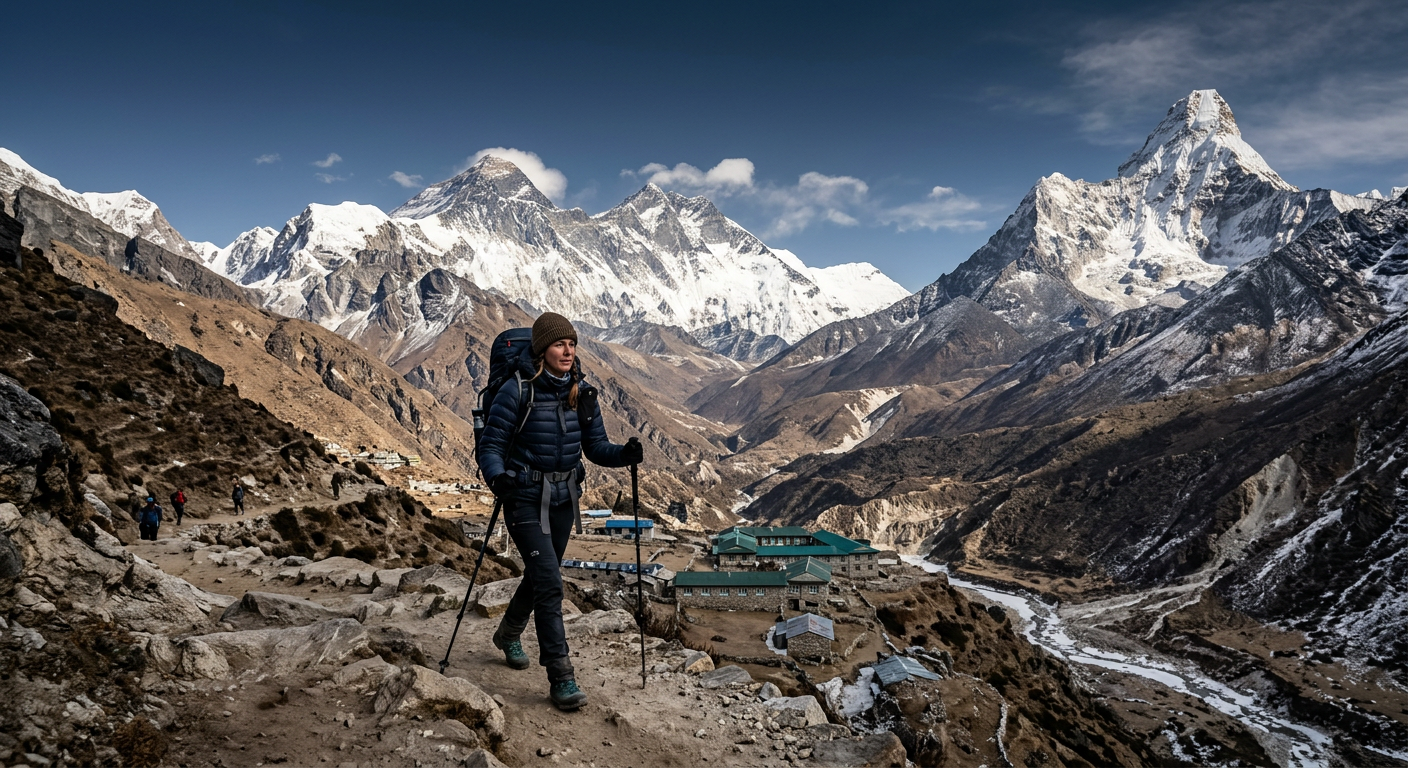
For many, this is the pinnacle of all trekking ambitions. The journey to the foot of Sagarmatha, the world’s highest mountain, is an epic in every sense of the word. The trek is as much a cultural and spiritual experience as it is a physical one, taking you deep into the heartland of the Sherpa people. You will walk in the shadow of giants like Ama Dablam and Lhotse, cross dizzying suspension bridges strung high above the Dudh Kosi river, and visit ancient Buddhist monasteries like Tengboche, where the sound of chanting monks and the scent of juniper incense fill the thin air. The goal is, of course, Everest Base Camp itself—a chaotic, humbling city of tents at the foot of the treacherous Khumbu Icefall. The altitude is the primary and most significant challenge, making this a gruelling test of physical endurance and mental fortitude. It is for the determined, well-prepared trekker with a powerful desire to stand in the presence of greatness.
Practicalities: Fitness is crucial, but successful acclimatisation is everything. Most treks take around 12-14 days to allow for a slow, safe ascent. The trek begins with a dramatic flight into the mountainside airstrip at Lukla. Due to the extreme altitude and potential for acute mountain sickness, going with a reputable guide is strongly advised for your safety and success.
GR20, Corsica (Expert)
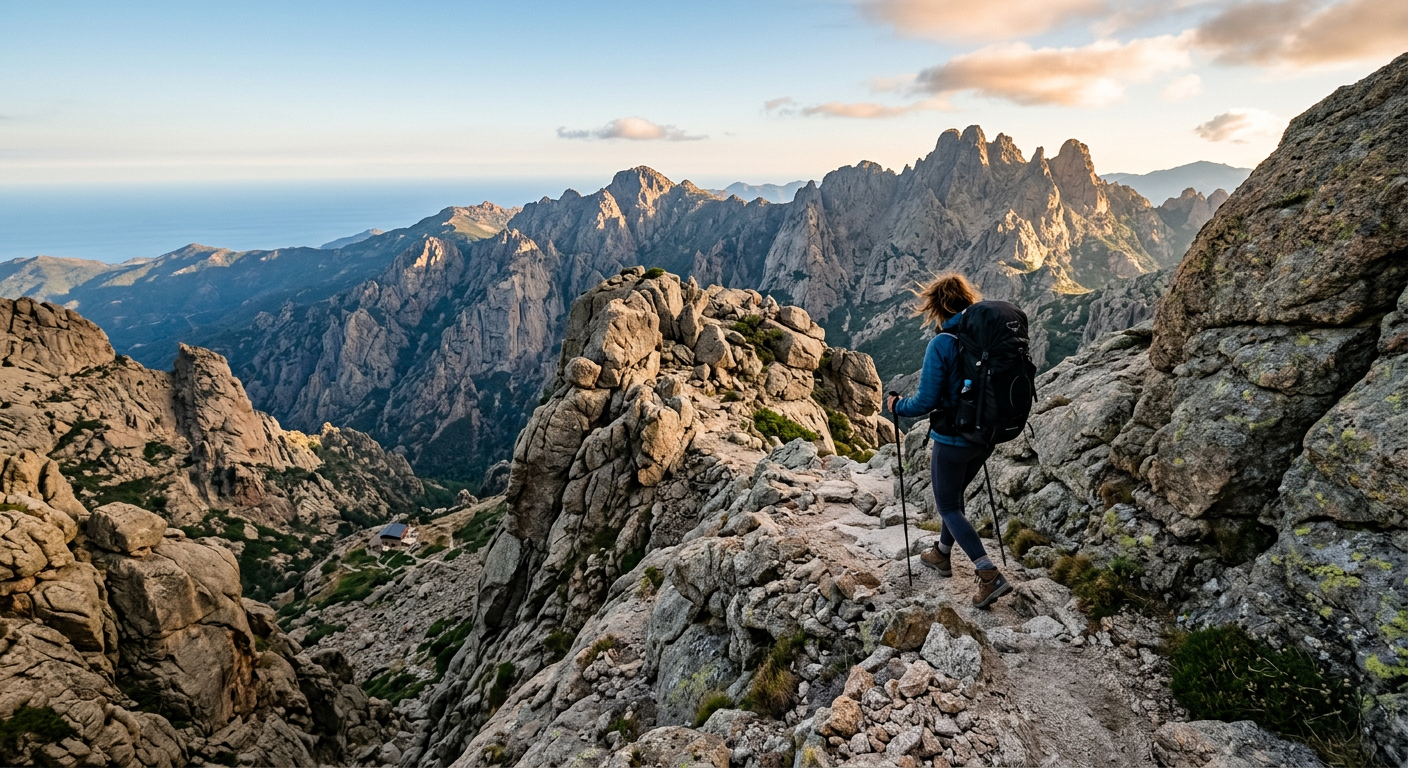
Often whispered in hushed, reverent tones amongst seasoned trekkers, the GR20 has a fearsome reputation as Europe’s toughest long-distance trail. This is not a walk; it is a relentless, 180-kilometre scramble along the jagged granite spine of Corsica. The trail is divided into two distinct halves: the northern section is a highly technical and exposed world of steep rocky ascents, chain-assisted scrambles, and knife-edge ridges. The southern half is slightly less severe but still exceptionally rugged and demanding. This is a trek for the mountain-goat-fit, for those with a superb head for heights, solid scrambling experience, and a masochistic love for punishingly beautiful terrain. Your reward for the ordeal is the savage beauty of the island’s interior and sublime views over the Mediterranean. You will earn your rest each night at the basic mountain refuges, sharing stories of the day’s conquests.
Practicalities: This is not a trek for the faint-hearted or inexperienced. Proper mountain boots, excellent kit, and a high level of fitness are prerequisites. Attempting this outside the main season of late June to early September is for elite mountaineers only. Forget looking for 'last minute deals'; this is a serious expedition that requires extensive planning, often with a specialist operator to manage the complex logistics of refuge booking and supplies. Fly into Calvi for the north or Figari for the south.
Torres del Paine O Circuit, Patagonia (Expert)
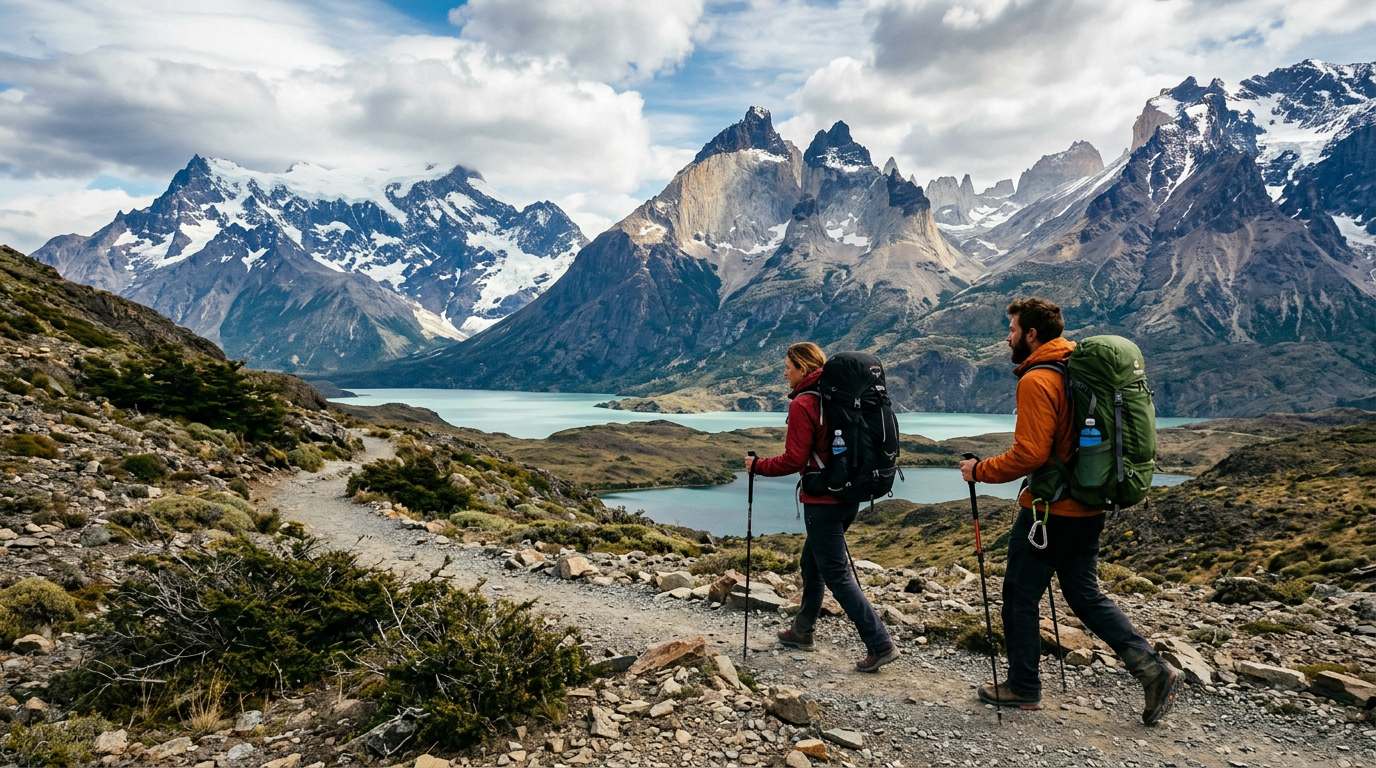
If the GR20 is Europe’s toughest, the 'O' Circuit in Torres del Paine is Patagonia’s grandest challenge. While most visitors opt for the shorter and more crowded 'W' trek, the full 'O' Circuit is a true wilderness expedition that takes you into the remote, seldom-seen backside of the Paine massif. This 130-kilometre loop involves contending with the infamous Patagonian wind, crossing the challenging John Gardner Pass (often in snow), and descending alongside the immense, creaking mass of the Grey Glacier. The scenery is simply breathtaking at every turn: turquoise lakes, vast glaciers calving icebergs into the water, and of course, the iconic granite towers—the ‘Torres’—that give the park its name. This trek is for the hardy, experienced backpacker who is prepared for wildly unpredictable and often brutal weather, and who is happy to be self-sufficient for significant portions of the route. It’s a profound immersion into one of the world’s last great wildernesses.
Practicalities: The trekking season is the southern hemisphere's summer, from December to March. The park has an extremely rigid booking system for its campsites and refugios, which must be booked many months, sometimes a year, in advance. This makes the DIY approach incredibly complex. A guided or fully supported trip removes this significant logistical headache. The gateway city is Puerto Natales, reached via a flight to Punta Arenas (PUQ).
Kilimanjaro Lemosho Route, Tanzania (Expert)
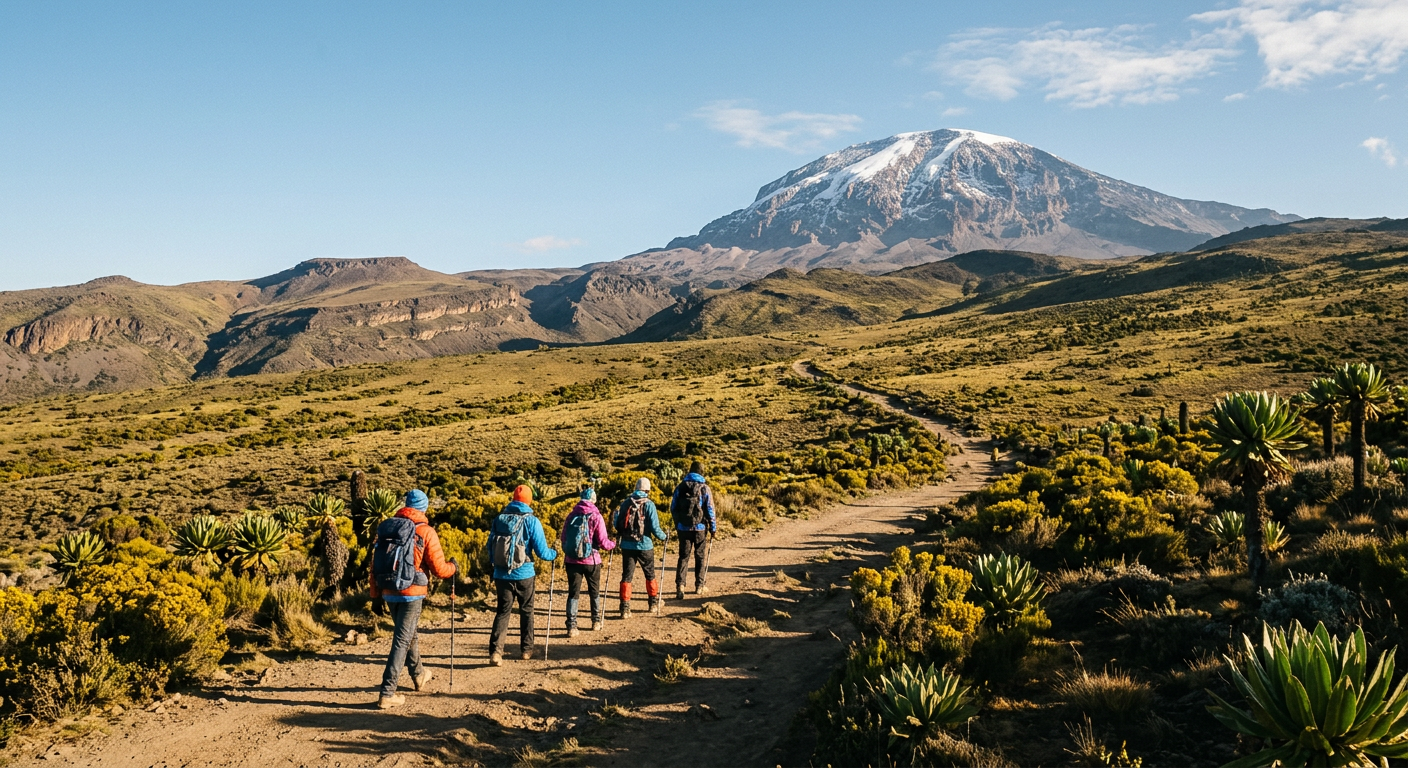
Summiting Mount Kilimanjaro is a monumental life goal for many adventurous travellers. While it is a non-technical climb requiring no ropes or mountaineering skills, it must be firmly categorised as an expert-level trek due to the extreme challenge of high altitude. At 5,895 metres, the 'Roof of Africa' pushes the body to its absolute limit. The Lemosho route is widely regarded as the most beautiful and effective of all the trails. Its longer eight-day itinerary allows for superior acclimatisation, significantly increasing your chances of reaching the summit safely. The route traverses a magnificent range of ecosystems, beginning in lush rainforest teeming with colobus monkeys, moving through heath and moorland, across a stark alpine desert, and finally onto the arctic-like summit zone. The final push to Uhuru Peak is a pre-dawn, physically and mentally gruelling ascent in freezing temperatures, but the reward—watching the sunrise over the African plains from the continent's highest point—is an experience that will be seared into your memory forever.
Practicalities: A licensed guide and support team of porters and a cook are mandatory for all climbs on Kilimanjaro. Choosing a reputable operator that prioritises safety and ethical treatment of staff is paramount. The climb can be undertaken for much of the year, but the dry seasons (January-March and June-October) are best. You will fly into Kilimanjaro International Airport (JRO).
Choosing the right tier for you
The beauty of a walking holiday lies in finding the perfect match between your own capabilities and the character of the trail. Honesty is your most crucial piece of kit. A 'Beginner' trek is not a sign of lesser ambition; it signifies a desire for spectacular scenery on well-marked paths without gruelling daily distances or significant altitude. These routes are perfect if you are new to multi-day walking or if your primary goal is relaxation and cultural immersion. The 'Intermediate' tier is for the seasoned weekend hill-walker, someone who is comfortable with full-day hikes involving sustained ascents and descents. You should have a good level of cardiovascular fitness and be prepared for variable weather and more challenging underfoot conditions, possibly including moderate altitude.
The 'Expert' tier is reserved for those with significant prior experience of multi-day, high-altitude, or technically demanding treks. These are serious undertakings in remote environments where conditions can be extreme and help can be far away. You must be exceptionally fit, mentally resilient, and comfortable with exposure, scrambling, or the profound effects of extreme altitude. Underestimating an expert-level trek is not just unwise, it is dangerous. Our purpose is to have that crucial conversation with you, to understand your experience and aspirations, and guide you towards an adventure that will challenge, delight, and inspire you—not break you. The right mountain is not always the highest one; it is the one that allows you to return with your spirit soaring and your soul recharged.
Inspired?
Plan a trip like this
Our specialists craft every itinerary from scratch — ATOL & ABTA protected, with 24/7 in-trip support.
Enquire Now